Strength training for beginners offers far more than bigger muscles. It protects your bones. It supports your balance. It even helps manage chronic conditions like arthritis and diabetes. Yet only one in four adults meet basic strength training guidelines. Most people simply don’t know where to start.
This article breaks down what strength training actually does for your body. It covers how often to train, and how to begin safely, even with zero experience.
For a full-body routine that pairs well with strength work, read our guide on Simple Home Exercises for Beginners.
Strength Training for Beginners: What It Actually Does
Muscle mass declines naturally with age. This process starts around 35. It speeds up further after 65 for women and 70 for men. Strength training slows this decline directly. It can even reverse some of it.
The benefits go well beyond muscle size. Strength training reduces fall risk by improving overall balance. It increases bone density, lowering fracture risk. It can also ease symptoms of arthritis, back pain, heart disease, and diabetes.
Read more on how every sustainable routine needs a stripped-down backup for mornings when time or energy is limited.
Strength Training for Beginners: The Mental Benefits Too
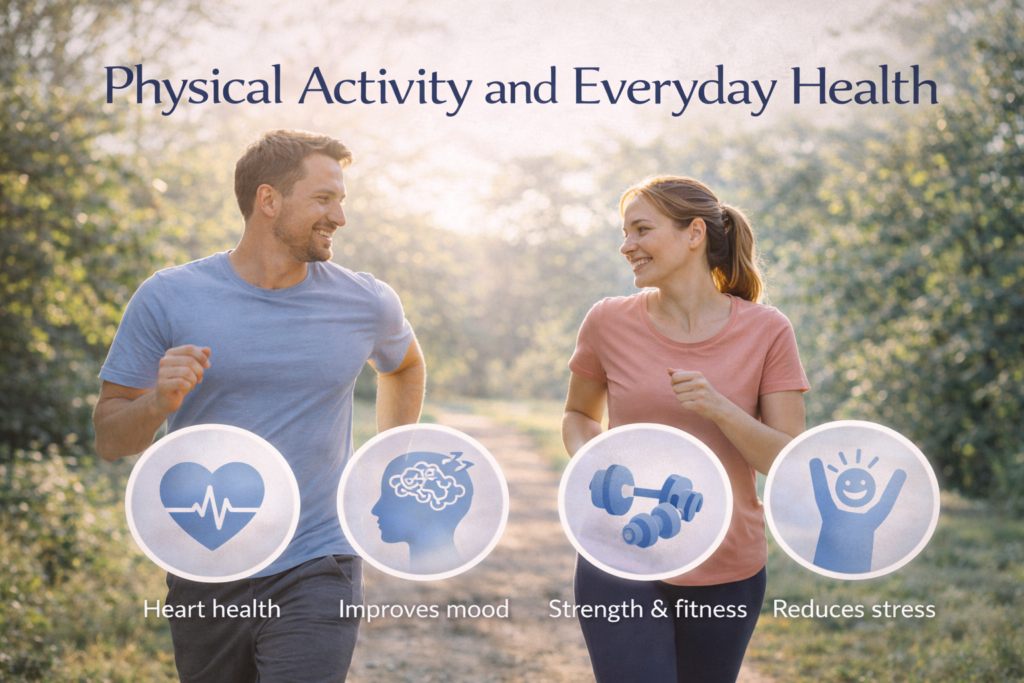
training supports mental health, not just physical health. Feeling physically capable builds real confidence. Many people report improved mood and reduced symptoms of depression after starting a regular strength routine.
This connection works both ways. Better mood often means better consistency. Better consistency means better results. The two reinforce each other over time.
How Much Strength Training Do Beginners Actually Need
The CDC recommends at least two days of strength training each week. This applies to nearly all adults, not just athletes or older adults specifically.
Each session should work all your major muscle groups. Think legs, hips, back, chest, abdomen, shoulders, and arms. Aim for 8 to 12 repetitions per exercise. That counts as one set. One set is enough to start seeing benefit. Two or three sets offer more.
Rest matters just as much as the work itself. Avoid training the same muscle group two days in a row. Muscles need recovery time to actually get stronger.
Read our Article to find out the signs your immune system needs support.
Strength Training for Beginners: You Don’t Need a Gym
Strength training doesn’t require expensive equipment or a gym membership. Bodyweight exercises work genuinely well for beginners.
- Push-ups: start against a wall or on your knees if a full push-up feels too difficult at first.
- Squats: use your own bodyweight, or hold onto a chair for balance while you build confidence.
- Resistance bands: inexpensive, portable, and genuinely effective for building strength gradually.
- Household items: canned goods or water bottles work as light weights when you’re just getting started.
- Gardening and everyday movement: digging, carrying, and lifting around the house all count toward your weekly strength goal.
Building this into a habit matters more than perfecting your form on day one. Our guide on Healthy Habits That Actually Stick covers exactly how to make a new routine last.
Starting Strength Training Safely as a Beginner
A few simple precautions make starting far safer, especially for complete beginners.
- Check with your doctor first: this matters especially if you have an existing health condition or haven’t exercised in a while.
- Start lighter than feels necessary: you should feel challenged by the last few repetitions, not exhausted by the first ones.
- Wear proper shoes: supportive athletic shoes with a rubber sole protect against slips and strain.
- Learn the movement before adding weight: proper form protects your joints far more than heavier weights ever will.
- Expect some soreness: mild muscle soreness after a new routine is normal. Sharp or persistent pain isn’t. Stop and check with a professional if that happens.
Strength Training for Beginners Over 50
Strength training becomes especially important as women move through and beyond menopause. Bone density drops faster during this stage, and muscle loss accelerates too. The same core principles apply, just with a bit more attention to starting gently and progressing steadily.
Our guide on Healthy Aging for Women After 50 covers this connection between strength, bone health, and hormonal change in more depth.
The CDC’s guide to strength training for adults offers further detail on recommended activities and how to structure a weekly routine.
Key Takeaways
- Strength training for beginners offers benefits well beyond muscle size, including better balance, bone density, and mood.
- The CDC recommends at least two days of strength training weekly, targeting all major muscle groups.
- Bodyweight exercises, resistance bands, and household items work just as well as gym equipment for building strength.
- Starting light, learning proper form, and allowing recovery time between sessions all support safer, more sustainable progress.
- Strength training becomes especially protective for women after 50, when bone and muscle loss both accelerate.
Final Thoughts
Strength training for beginners isn’t about lifting heavy or looking a certain way. It’s about building a body that supports you, for decades, not just for the next few years. Stronger muscles mean better balance, sturdier bones, and more independence as you age.
Start with two sessions this week. Use your bodyweight if that’s all you have. Focus on learning the movements properly before adding any resistance at all. Consistency, even in small doses, builds real strength over time.
You don’t need to be strong to start. You start to become strong.
Medical Disclaimer: The information on this page is provided for educational and informational purposes only and is not intended as medical advice. It should not replace consultation with a qualified healthcare professional. For full details, please read our Disclaimer.