Simple home exercises for beginners remove two of the biggest barriers to getting started: cost and intimidation. You don’t need a gym membership, specialist equipment, or prior fitness experience. Adults are recommended to get at least 150 minutes of moderate physical activity a week, roughly 20 to 30 minutes a day, alongside strengthening and balance exercises at least twice weekly. All of this is genuinely achievable at home.
This article covers where to actually start, a simple beginner-friendly routine using just your bodyweight, and how to build consistency without burning out in the first two weeks.
For building a foundation of daily movement before adding structured exercise, read our guide on The Health Benefits of Walking Every Day.
Simple Home Exercises for Beginners: Where to Start
The biggest mistake most beginners make is starting too intensely, too fast. A more sustainable approach is starting with a genuinely manageable routine and building from there, since consistency over the first few weeks matters far more than intensity.
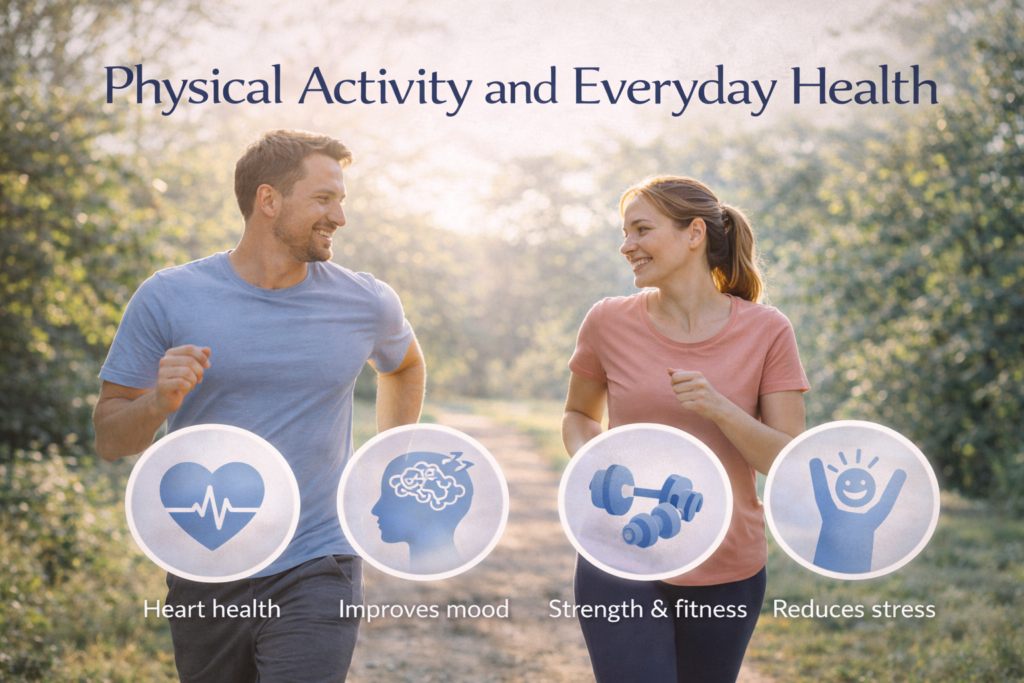
Bodyweight exercises are the natural starting point for beginners, since they require no equipment and can be adjusted to any fitness level. Regular exercise has been shown to reduce the risk of chronic illnesses like heart disease, type 2 diabetes, and stroke, while also boosting self-esteem, energy, mood, and sleep quality, benefits that start accumulating from the very first weeks of a new routine.
A Simple Bodyweight Routine for Beginners
This routine covers the major muscle groups using nothing but your bodyweight and a small amount of floor space. Aim for two to three sessions a week to start.
Warm-up (5 minutes)
Warming up before you exercise reduces your risk of injury. A few minutes of light movement, like marching in place, arm circles, and gentle stretching, prepares your muscles and joints before the main routine begins.
The main routine
- Bodyweight squats: 2 sets of 8 to 12 repetitions. Stand with feet shoulder-width apart, lower your hips as if sitting into a chair, then stand back up. This works the legs and glutes without any equipment.
- Wall or knee push-ups: 2 sets of 6 to 10 repetitions. Beginners can start against a wall or with knees on the floor, gradually progressing to a full push-up as strength builds.
- Glute bridges: 2 sets of 10 to 12 repetitions. Lying on your back with knees bent, lift your hips upward, squeezing your glutes at the top, then lower slowly.
- Standing or seated marches: 2 sets of 20 to 30 seconds. Lifting knees alternately, at a controlled pace, raises your heart rate gently while engaging your core.
- Plank hold: 2 sets of 15 to 30 seconds, building up gradually. This strengthens the core without any spinal movement, making it beginner-friendly and low-impact.
Cool-down (5 minutes)
Finish with gentle stretching, focusing on the muscles you just worked. This supports flexibility and helps your body transition out of exercise mode more comfortably.
Simple Home Exercises for Beginners: Building the Habit
Starting a routine is the easy part. Making it stick is where most people struggle. A few evidence-based approaches genuinely help.
- Schedule it like an appointment: plotting your exercise days and times into your calendar in advance makes you significantly more likely to follow through than a vague intention to “exercise more.”
- Build in a rest day: a structured plan should include at least one rest day per week, on a day of your choosing, since recovery is part of genuine progress, not a break from it.
- Start with a realistic frequency: two to three sessions a week is a strong, sustainable starting point, more effective long-term than an ambitious daily plan that’s harder to maintain.
- Track progress loosely, not perfectly: noticing that a set feels easier after a few weeks is genuinely motivating, and it doesn’t require detailed logging to notice.
Building any new physical routine follows the same principles as other lasting habits. Our guide on Healthy Habits That Actually Stick covers the research behind what actually makes a new habit hold, beyond initial motivation.
Safety Notes Worth Knowing Before You Start
These exercises are generally suitable for most people in good health with a reasonable fitness level. However, get advice from a healthcare professional first if you’re not sure whether these exercises suit your current fitness level, you have an existing health problem, injury, or symptoms, you’re feeling unwell, or you’ve recently had a significant health event like a heart attack or surgery.
Stop immediately if you feel pain or become unwell during exercise, and seek medical advice if any symptoms don’t resolve.
The NHS home workout videos offer free, instructor-led routines ranging from 10 to 45 minutes, covering aerobic exercise, strength training, and pilates for a range of fitness levels.
Key Takeaways
- Simple home exercises for beginners require no equipment or gym membership, making bodyweight movements like squats, push-ups, and planks a genuinely accessible starting point.
- Adults should aim for around 150 minutes of moderate activity weekly, plus strengthening exercises at least twice a week, both achievable through home workouts.
- Starting with a manageable, two to three session weekly routine tends to be far more sustainable than an ambitious daily plan.
- Scheduling exercise sessions in advance and building in a rest day significantly improve the odds of sticking with a new routine.
- Warming up before and cooling down after exercise reduces injury risk and supports recovery.
Final Thoughts
Simple home exercises for beginners prove that meaningful fitness progress doesn’t require a gym, equipment, or hours of free time. A living room, a small amount of floor space, and a consistent two to three sessions a week are genuinely enough to start building strength, energy, and confidence.
Don’t wait for the perfect plan or the perfect week to begin. Start with the routine above, adjust the repetitions to what feels manageable right now, and let consistency do the rest over the coming weeks.
The best workout is the one you’ll actually do again tomorrow.
Medical Disclaimer: The information on this page is provided for educational and informational purposes only and is not intended as medical advice. It should not replace consultation with a qualified healthcare professional. For full details, please read our Disclaimer.