Recognizing burnout early is one of the most valuable skills you can develop for your long-term mental and physical health. A 2024 study by SHRM found that 44 percent of employees feel burned out and 45 percent feel emotionally drained. By the end of the workday, 51 percent feel emotionally used up. Yet most people in the early stages of burnout do not identify what is happening to them. Instead, they push harder, sleep less, and drop the things that restore them. They rationalise the warning signs until the condition becomes severe enough to demand attention.
The World Health Organization officially classified burnout as an occupational phenomenon in 2019. It defines burnout through three core dimensions: emotional exhaustion, cynicism or depersonalisation toward one’s work, and a reduced sense of professional efficacy. A 2025 review published in Frontiers in Public Health synthesised evidence from 45 studies published between 2010 and 2025. It confirmed that early warning signs of burnout go unrecognised in the majority of cases until the condition has already become chronic. The earlier burnout is caught, the more options exist for recovery and the less severe the long-term consequences.
This article explains how burnout develops and what the earliest warning signs look like. It also covers how to distinguish burnout from ordinary stress and what to do when you recognise the pattern in yourself.
To understand how rest deficits contribute to burnout and what different types of exhaustion actually need, read our article on The 6 Types of Rest You Need Beyond Sleep.
What Burnout Actually Is — and What It Is Not
Recognizing burnout requires first understanding what burnout actually is — because it is consistently confused with ordinary stress, depression, or simply being tired. These distinctions matter for both identification and treatment.
Burnout versus ordinary stress
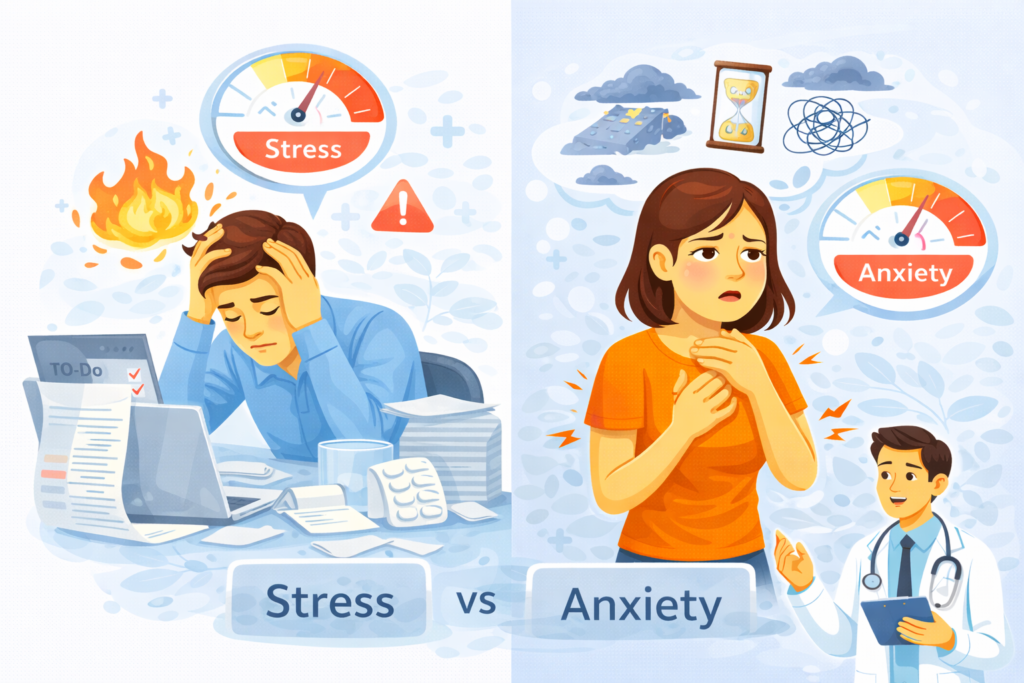
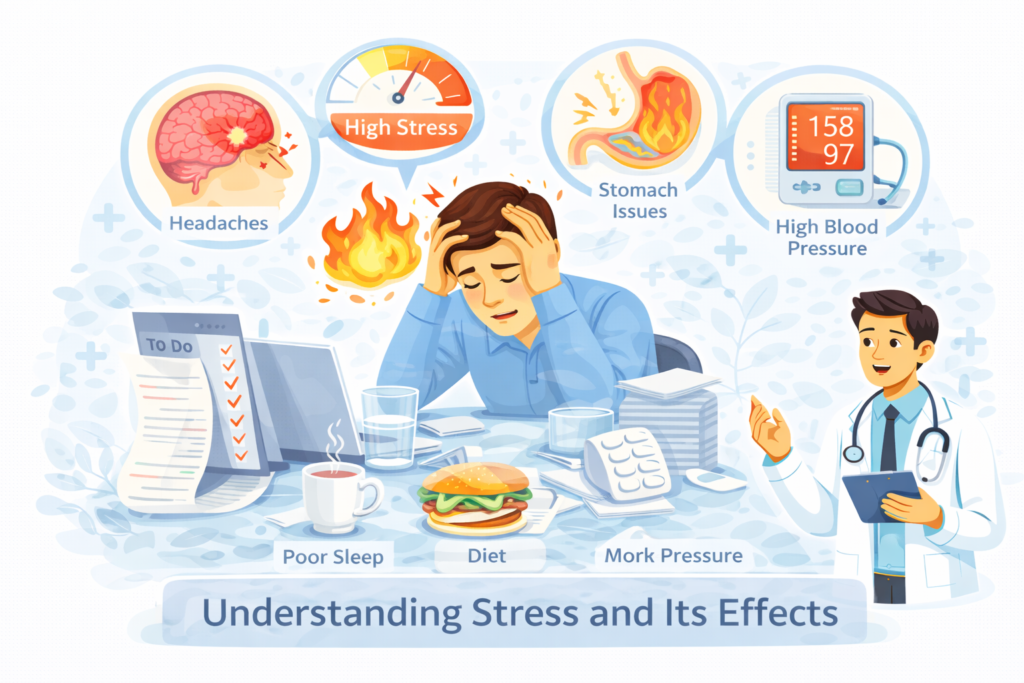
Stress involves overengagement. The stressed person feels urgency, pressure, and emotional intensity — overwhelmed by too much. Their problems feel solvable if only they could get on top of the workload. Burnout involves the opposite. The burned-out person feels disengagement, emotional blunting, and a loss of meaning. Problems no longer feel solvable. Motivation to solve them has eroded. Stress is too much pressure. Burnout is too little left.
Burnout versus depression
Burnout and depression share significant symptom overlap — fatigue, reduced motivation, difficulty concentrating, and social withdrawal. However, they differ in important ways. Burnout is contextually linked — it develops from a specific prolonged stressor, most commonly work. It tends to lift when that stressor is removed or significantly reduced. Depression is pervasive — it affects all areas of life regardless of context and does not resolve simply by changing the work environment. The two conditions can co-exist, and burnout that goes unaddressed increases the risk of developing clinical depression.
The WHO three-domain definition
The World Health Organization’s definition of burnout encompasses three core dimensions. Emotional exhaustion is the first — a profound depletion of physical and emotional energy that does not recover with normal rest. Cynicism and depersonalisation come second. This is an emotional distancing from work, colleagues, or clients that develops as a protective response against further emotional drain. Reduced professional efficacy is the third. This is the growing sense that one’s work is no longer meaningful, effective, or worth the effort being invested in it. All three dimensions tend to develop together, though their sequence varies between individuals and roles.
The Five Stages of Burnout — and Why Recognizing Each One Matters
Burnout does not arrive suddenly. It builds gradually through recognisable stages, each with its own characteristic signs. Recognizing burnout at an early stage is significantly easier than identifying it once it has become severe. Intervention at earlier stages also produces faster and more complete recovery.
Stage 1 — The honeymoon phase
The first stage of burnout development is paradoxically one of high energy and high commitment. A new role, a new project, or a new challenge generates enthusiasm, optimism, and willingness to invest significant effort. Work feels meaningful. Extra hours feel manageable and even satisfying. The person takes on more than is strictly required because they are genuinely motivated to deliver.
The risk in this stage is not the enthusiasm itself — it is the absence of sustainable habits around rest, boundaries, and recovery. People who move through the honeymoon phase without establishing those habits build a foundation for burnout even while performing at their best.
Stage 2 — Onset of stress
The initial enthusiasm of Stage 1 begins to meet the sustained reality of the demands placed on the person. Some days become significantly harder than others. Energy fluctuates more than before. Tasks that felt engaging start to feel effortful. Sleep quality may begin to decline. The person may also notice that recovery time is increasing — weekends no longer feel sufficient before Monday arrives.
Warning signs at this stage include:
- reduced productivity despite similar or greater effort
- forgetting things more often or finding it harder to concentrate
- beginning to avoid social contact after work because energy is too low
- increasing reliance on caffeine, alcohol, or food to manage energy and mood
- feeling mildly resentful of demands that previously felt manageable
- noticing that weekends no longer feel sufficient to fully recover before Monday
Many people normalise these signs at Stage 2. They attribute them to a busy period or a difficult week. This rationalisation is understandable — but it delays intervention until the condition advances.
Read more about understanding the physiology of the science of awe.
Stage 3 — Chronic stress
A December 2024 review published in the International Journal of Environmental Research and Public Health looked closely at this stage. It describes Stage 3 as a critical turning point in burnout progression. The person is no longer experiencing a difficult phase — they are experiencing a sustained state of depletion. Warning signs of Stage 2 have become consistent rather than intermittent. Physical symptoms begin to appear alongside the psychological ones.
Warning signs at this stage include:
- persistent fatigue that does not improve even after rest or time off
- significant cynicism — a growing sense that the work, the organisation, or the people around you are not worth the effort
- procrastination becoming a significant daily pattern rather than an occasional response to difficult tasks
- physical symptoms including frequent headaches, digestive problems, recurring illness, muscle tension, and disrupted sleep
- emotional flatness — difficulty feeling genuine enthusiasm, connection, or satisfaction even outside of work
- increasingly frequent irritability, particularly in response to minor frustrations
- withdrawing from friends, family, and leisure activities that were previously enjoyable
Stage 3 is the stage at which most people finally recognise that something is wrong. However, many still do not identify it as burnout. They seek help for the headaches or the sleep problems without connecting those symptoms to the broader pattern of chronic occupational stress.
Stage 4 — Full burnout
At Stage 4, the person has reached a point of significant impairment. The 2025 Frontiers in Public Health review identified the characteristic features of this stage as depersonalisation — a detached, even contemptuous attitude toward work and colleagues. Alongside this comes severe exhaustion, a significant loss of professional efficacy, and frequently, the emergence of clinical anxiety or depression as co-occurring conditions.
Normal functioning becomes genuinely difficult at this stage. Taking time off provides temporary relief but does not resolve the underlying depletion. The person returns to the same environment and the cycle restarts quickly. Recovery from Stage 4 burnout typically requires significant structural change — not just better self-care practices.
Stage 5 — Habitual burnout
If burnout at Stage 4 goes unaddressed, it can become habitual — an embedded state that the person has adapted to as their baseline. The depersonalisation, exhaustion, and cynicism become so normalised that the person may no longer recognise them as symptoms. Recovery from Stage 5 burnout is possible but requires extended intervention, significant environmental change, and sustained professional support. This represents the strongest argument for recognizing burnout at the earliest possible stage.
Recognizing Burnout Early: The Warning Signs Most People Miss
The 2025 Frontiers in Public Health review introduced a three-domain framework for recognizing burnout early — intrapersonal indicators, interpersonal indicators, and occupational manifestations. Understanding each domain helps you identify the pattern before it advances.
Intrapersonal indicators — changes within yourself
- Persistent fatigue that sleep does not relieve: this is the single most consistently reported early burnout sign. Normal tiredness responds to rest. Burnout-related fatigue does not. Waking after eight hours of sleep and feeling unrefreshed can be a significant early signal. This is especially true if it represents a change from your previous experience.
- Impaired concentration and memory: difficulty holding focus and forgetting conversations or commitments. This can include needing to re-read material that would previously have been retained on the first pass.
- Reduced positive emotion: a gradual narrowing of the emotional range. Specifically, this means a reduction in the frequency and intensity of positive experiences like enthusiasm, satisfaction, and connection, while negative emotions remain relatively intact.
- Increased physical complaints without clear medical cause: headaches, muscle tension, gastrointestinal symptoms, recurring minor illness, and disrupted sleep that has no identifiable medical explanation.
- Increasing reliance on coping shortcuts: alcohol, caffeine, excessive screen time, or food used more frequently than before to manage energy and emotional state.
Interpersonal indicators — changes in how you relate to others
- Reducing empathy: finding it harder to care about other people’s situations, concerns, or needs. This includes colleagues, clients, or family members you would normally engage with easily.
- Increased irritability: reacting with disproportionate frustration to minor provocations, particularly from people who depend on you. The irritability of early burnout is often most visible at home, where the mask of professional performance is dropped.
- Social withdrawal: declining invitations and reducing contact with friends and family — not because solitude is restorative but because engagement feels beyond current capacity.
- Feeling unseen or unappreciated: a growing sense that your contribution is not recognised, combined with reduced motivation to seek that recognition.
Occupational manifestations — changes in how you work
- Declining performance despite continued effort: outputs deteriorating while inputs — hours worked, effort applied — remain the same or increase.
- Procrastination becoming a consistent pattern: tasks that are clearly important and clearly within your competence being repeatedly delayed or avoided. The avoidance is not laziness — it is an exhausted nervous system protecting itself from further demand.
- Loss of meaning in work: the sense that what you do no longer matters. Or, it matters but you no longer have the energy to care about it.
- Boundary collapse: either working far beyond sustainable hours without the ability to stop, or doing the minimum possible to get through the day. Often, both patterns alternate within the same person.
What to Do When Recognizing Burnout in Yourself
The most important thing to know about recognizing burnout is what comes next. Knowing the pattern is only useful if it prompts action — and the action required depends significantly on the stage at which you identify it.
At Stage 1 or 2 — build recovery habits before depletion sets in
At the earliest stages, prevention is the intervention. Establish clear boundaries around working hours. Build genuine recovery activities into your schedule — not as rewards for finishing work, but as non-negotiable anchors that protect your capacity. Prioritise sleep as a performance essential. Identify the two or three activities that most reliably restore your energy and protect time for them consistently — especially when the workload is highest.
At Stage 3 — reduce load and restore fundamentals
At Stage 3, self-care habits alone are no longer sufficient. Structural changes become necessary. This means reducing your workload genuinely — not nominally. Delegate, decline, or delay non-essential commitments. Talk to a manager, a partner, or a trusted colleague about what you are experiencing. Many people at Stage 3 cannot clearly assess what needs to change because chronic stress impairs the executive function that evaluates options. Telling someone what is happening is both practically helpful and psychologically relieving.
Seek support from a GP if physical symptoms are present. Consider whether a referral to a therapist or occupational health professional is appropriate. The December 2024 review specifically identifies Stage 3 as the critical intervention point. It is early enough for recovery without specialist treatment, but it requires genuine structural change rather than self-management alone.
At Stage 4 or 5 — seek professional support for recognizing burnout recovery
At Stage 4 or 5, self-directed recovery is rarely sufficient. See your GP. Be honest about what you are experiencing — the fatigue, the emotional blunting, the cognitive difficulties, the physical symptoms. Ask about referral options for psychological support. Cognitive behavioural therapy has strong evidence for burnout recovery. Acceptance and Commitment Therapy also shows good outcomes for burnout-related psychological flexibility and values clarification.
Burnout at this stage may require significant time away from the environment driving it. That conversation with an employer — supported by a GP fit note if necessary — is a medical conversation, not a failure conversation.
For more on how mental load, anxiety, and emotional exhaustion connect in ways that are frequently misunderstood, read our article on High-Functioning Anxiety: Why You Look Fine But Feel Drowning.
The NHS guide to stress provides evidence-based self-help strategies for managing occupational stress and burnout, and explains when and how to seek professional support.
Key Takeaways
- Recognizing burnout early is the most important factor in recovery. A 2025 Frontiers in Public Health review of 45 studies confirmed that early warning signs go unrecognised in the majority of cases until the condition has already become chronic.
- Burnout is distinct from ordinary stress — stress involves overengagement and intensity, while burnout involves disengagement, emotional blunting, and loss of meaning.
- The WHO defines burnout through three core dimensions: emotional exhaustion, cynicism or depersonalisation, and reduced professional efficacy.
- A 2024 SHRM study found that 44 percent of employees feel burned out and 51 percent feel emotionally used up by the end of the workday.
- The earliest warning signs include persistent fatigue that sleep does not relieve, impaired concentration, reduced positive emotion, increasing irritability, and declining performance despite continued effort. These signs are consistently normalised and dismissed before the condition becomes serious.
- At Stages 1 to 2, prevention through sustainable habits and clear boundaries is achievable without professional support. At Stage 3, structural workload change and professional guidance become recommended. At Stages 4 to 5, specialist psychological support is typically necessary for full recovery.
- Burnout that goes unaddressed significantly increases the risk of developing clinical depression and anxiety — making early intervention a priority for long-term mental health.
Final Thoughts
Recognizing burnout in yourself requires a particular kind of honesty. That honesty is hard to sustain when you are exhausted, when the demands feel non-negotiable, and when everything about the culture around you says that pushing through is what competent people do. The earliest warning signs are easy to dismiss precisely because they appear during periods when you are still functioning. You are still delivering. You are still showing up. It does not feel like the right time to acknowledge that something is wrong.
That is exactly when it is the right time. Recovery from Stage 2 burnout takes weeks. Recovery from Stage 4 burnout takes months — sometimes longer. The earlier you recognise the pattern, the more options you have and the less of yourself you lose in the process.
Notice the fatigue that does not lift. Pay attention to the cynicism creeping in. Watch for the things that used to matter starting to feel empty. Then act on what you notice — because the cost of waiting is always higher than the cost of stopping.
Medical Disclaimer: The information on this page is provided for educational and informational purposes only and is not intended as medical advice. It should not replace consultation with a qualified healthcare professional. For full details, please read our Disclaimer.