Managing health anxiety starts with understanding what it actually is. The NHS defines health anxiety as spending so much time worrying you’re ill, or going to become ill, that it starts to take over your life. It’s related to obsessive compulsive disorder. It often involves a cycle of checking, researching, and seeking reassurance that feels productive in the moment but tends to make the anxiety worse over time.
This article explains what keeps health anxiety going and how to recognise the cycle in yourself. It also covers specific, practical steps that help without requiring you to simply “stop worrying.”
For more on how anxiety can build quietly beneath a functioning exterior, read our guide on High-Functioning Anxiety: Why You Look Fine But Feel Drowning.
What Managing Health Anxiety Actually Requires Understanding
Health anxiety often develops after a specific experience. A period of ill health, a particularly stressful life stage, or illness or death within the family can all contribute. Sometimes it develops because a family member worried a lot about their own health, or your health, when you were young. Understanding where the pattern started isn’t necessary for managing it, but it can help make sense of why it feels so persistent.
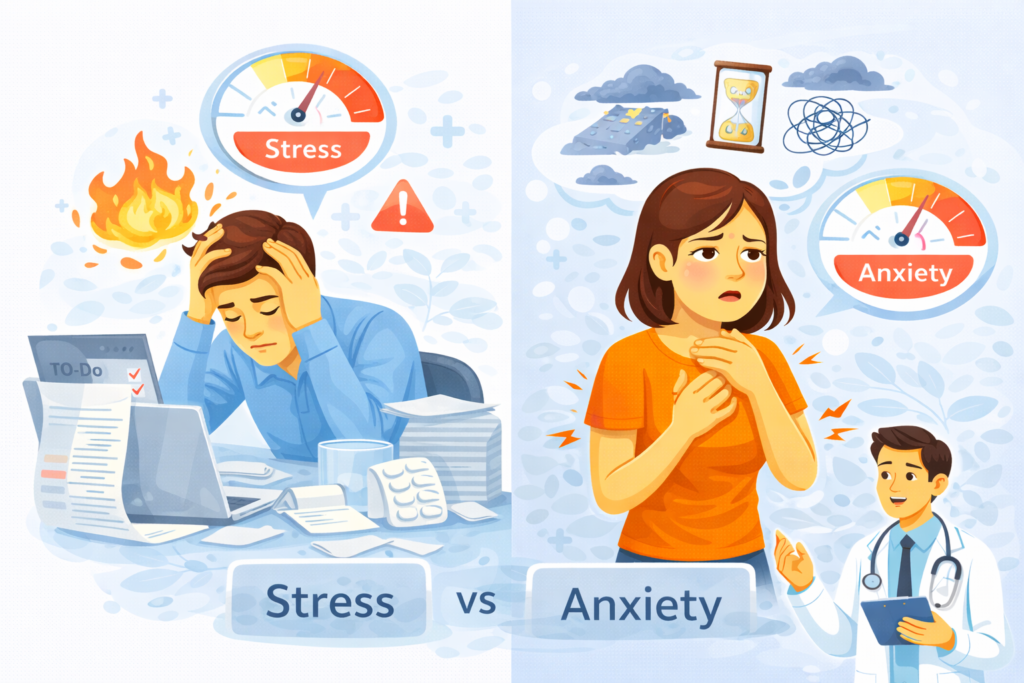
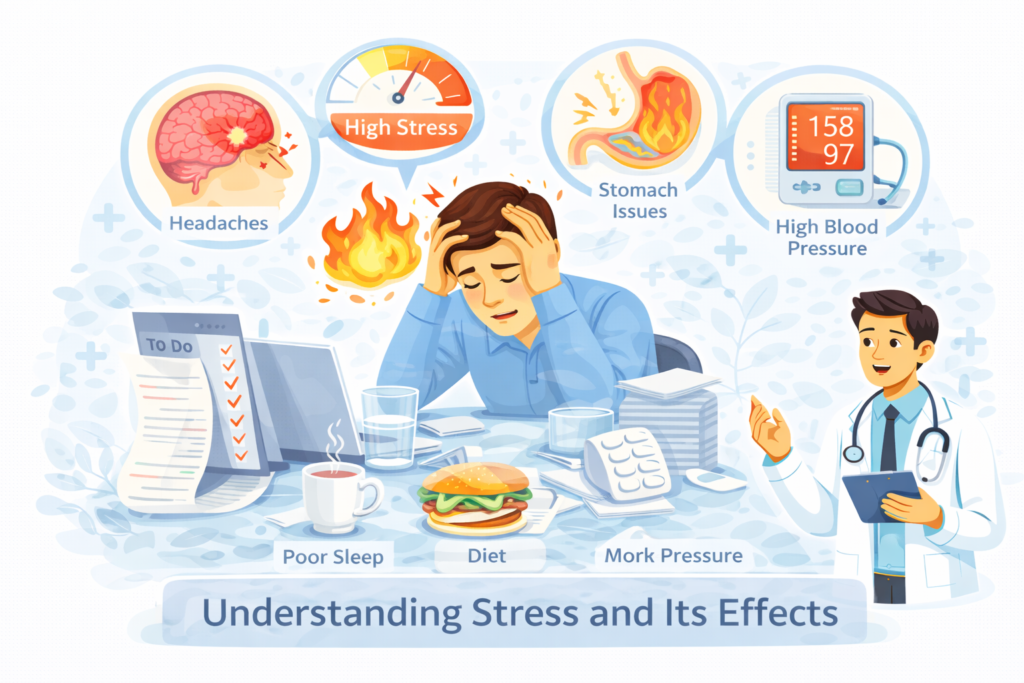
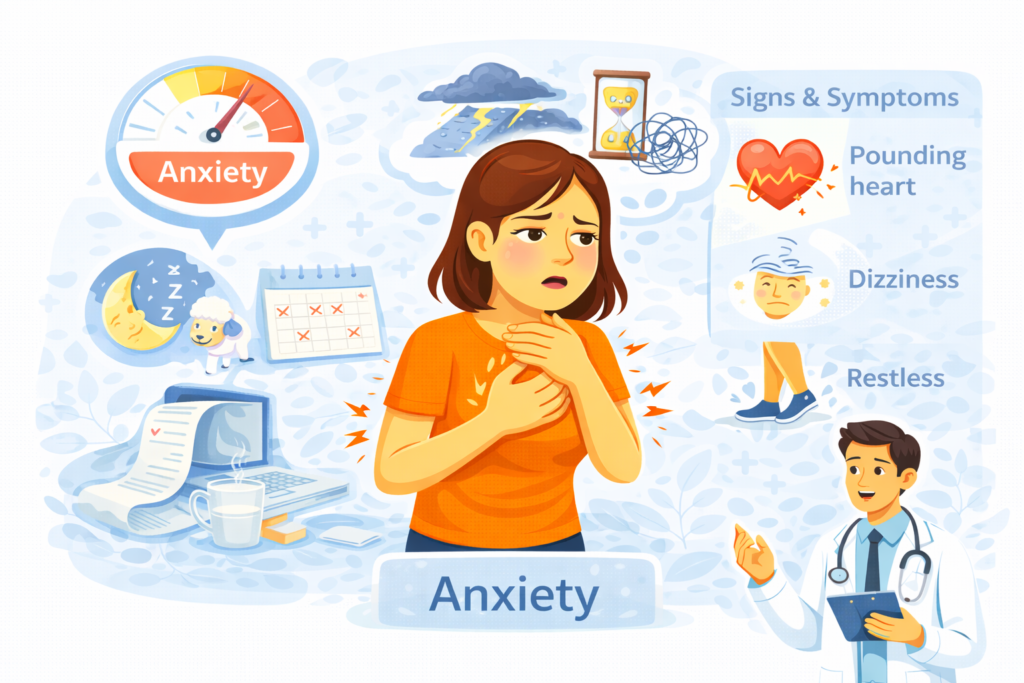
One of the trickiest parts of health anxiety is that anxiety itself produces real physical symptoms. Headaches and a racing heartbeat are common examples. It’s easy to mistake these anxiety symptoms for signs of the illness you’re actually worried about, which deepens the cycle further.
Managing Health Anxiety: Recognising the Cycle
Health anxiety tends to follow a recognisable pattern, even though it can feel different for everyone experiencing it.
- Noticing a sensation: a normal bodily sensation, like a headache or a racing heart, gets noticed more intensely than it would be otherwise.
- Interpreting it as dangerous: the mind interprets the sensation as a sign of serious illness, rather than something ordinary or explainable.
- Checking or researching: this might mean checking your body repeatedly, searching symptoms online, or asking loved ones for reassurance.
- Temporary relief, followed by renewed anxiety: checking or reassurance-seeking brings short-term relief. This relief fades quickly, often triggering the cycle to start again.
- Avoidance: some people cope by avoiding health-related information entirely, like turning off the TV during a hospital programme. This can paradoxically keep the anxiety alive by never allowing it to be tested against reality.
Recognising which parts of this cycle show up for you specifically is often the first real step toward managing health anxiety without panic.
Managing Health Anxiety: Practical Steps That Help
The NHS outlines several specific strategies that genuinely help interrupt the health anxiety cycle, rather than relying on willpower alone.
Learn more about the importance of self-compassion.
Track and gradually reduce checking behaviours
Start by simply noting how often you check your body, ask for reassurance, or look up health information. Awareness alone often reveals just how frequent these behaviours have become. From there, try gradually reducing the frequency over a week. This tends to feel more manageable and sustainable than stopping abruptly.
Separate worries from balanced thoughts
The NHS specifically recommends drawing a table with two columns. Write your health worries in the first column, then write more balanced thoughts alongside them in the second. This simple exercise creates distance between the anxious thought and the automatic belief that it must be true.
Limit reassurance-seeking deliberately
Reassurance from a doctor, a search engine, or a loved one can feel essential in the moment. Typically, it only relieves anxiety briefly before the cycle restarts. Deliberately limiting how often you seek reassurance, even when it feels uncomfortable, is one of the most evidence-supported ways to weaken the cycle over time.
Notice avoidance patterns too
Avoiding all health-related information might feel protective, but it can prevent you from learning that most symptoms genuinely are harmless. Gradually allowing yourself some exposure, at a pace that feels manageable, tends to reduce anxiety more effectively than total avoidance.
Build a broader foundation of resilience
Health anxiety often intensifies during periods of general stress or emotional depletion. Our guide on Building Emotional Resilience After Setbacks covers strategies that support your overall capacity to handle stress. This can make health anxiety feel less overwhelming alongside targeted techniques.
When to Seek Professional Support for Health Anxiety
It’s worth speaking to a GP if health anxiety is significantly affecting your daily life, relationships, or ability to function. A GP diagnosis of health anxiety often leads to a referral for talking therapy, particularly cognitive behavioural therapy, which has strong evidence specifically for this condition. Depending on your individual situation, a doctor may also offer medication for anxiety.
In England, you can refer yourself directly to an NHS talking therapies service for anxiety without needing a GP referral first. This can make getting started significantly faster.
The NHS guide to health anxiety provides further detail on symptoms, treatment options, and self-help strategies.
Key Takeaways
- Managing health anxiety starts with recognising the specific cycle of noticing, interpreting, checking, and temporary relief that keeps it going.
- Anxiety itself produces real physical symptoms, like headaches and a racing heart, which are easy to mistake for signs of the illness someone is worried about.
- Gradually reducing checking and reassurance-seeking behaviours is more sustainable, and more effective long-term, than stopping abruptly.
- Separating anxious thoughts from more balanced ones, using a simple two-column exercise, helps create distance from automatic worry.
- Cognitive behavioural therapy has strong evidence for health anxiety specifically, and self-referral to NHS talking therapies is available without a GP visit first.
Final Thoughts
Managing health anxiety without panic isn’t about convincing yourself nothing is ever wrong. It’s about recognising the specific cycle that keeps anxiety running, and gently interrupting it rather than fighting it head-on. Checking, researching, and seeking reassurance all feel like they’re helping in the moment. Often, they’re what keeps the anxiety returning instead.
If this cycle feels familiar, that recognition itself is meaningful progress. Small, consistent steps, like the ones outlined here, genuinely do add up. And if the anxiety feels too heavy to manage alone, professional support is available and can make a real difference.
You don’t have to trust every worried thought your mind produces. You can notice it, and choose differently.
Medical Disclaimer: The information on this page is provided for educational and informational purposes only and is not intended as medical advice. It should not replace consultation with a qualified healthcare professional. For full details, please read our Disclaimer.