Fatty liver disease is one of the most common liver conditions in the world — and one of the most overlooked. It affects roughly 1 in 4 adults globally, yet most people who have it do not know. There are often no obvious symptoms in the early stages. The condition tends to show up as a surprise finding during a routine blood test or scan done for another reason entirely. By the time symptoms appear, the liver may already have sustained significant damage.
The good news is that early-stage fatty liver disease is largely reversible. With the right lifestyle changes, the liver can shed excess fat and repair itself — sometimes within weeks. However, the window for reversal narrows as the condition progresses. Understanding what fatty liver disease is, recognising its early signs, and taking action before serious damage occurs is genuinely one of the most important things you can do for your long-term health.
This article explains what fatty liver disease actually is, what causes it, what signs to watch for, and exactly what the evidence says about reversing it.
To understand how chronic inflammation connects to liver health and metabolic disease, read our guide on Inflammation 101: How to Know if You Have It and What to Eat Next.
What Is Fatty Liver Disease?
Fatty liver disease develops when excess fat accumulates in liver cells beyond what the liver can process. A healthy liver contains a small amount of fat — less than 5 percent of its total weight. When fat exceeds that threshold, it interferes with the liver’s ability to filter toxins, regulate blood sugar, produce proteins, and manage metabolism.
There are two main types:
Metabolic dysfunction-associated steatotic liver disease (MASLD)
Previously called non-alcoholic fatty liver disease (NAFLD), MASLD is the most common form worldwide. It links to insulin resistance, obesity, type 2 diabetes, high blood pressure, and high cholesterol — collectively known as metabolic syndrome. It has nothing to do with alcohol. MASLD now affects approximately 25 percent of adults globally, and rates continue to rise in line with rising rates of metabolic syndrome.
In 2023, medical organisations formally renamed NAFLD to MASLD. This reflects a better understanding that the condition results from complex metabolic and environmental interactions — not simply from excess body fat alone. However, most research and NHS guidelines still use NAFLD, so both terms appear in this article.
Alcohol-related fatty liver disease (AFLD)
This form develops from drinking too much alcohol over time. Alcohol interferes with the liver’s ability to process fat, causing fat to build up in liver cells. Eliminating alcohol is the most critical step in reversing AFLD. The focus of this article is primarily on MASLD, since it is significantly more common and often goes unrecognised for longer.
How fatty liver disease progresses
Both types of fatty liver disease follow a similar progression if left untreated:
- Stage 1 — Simple steatosis (fatty liver): fat accumulates in liver cells with little or no inflammation. This stage is fully reversible with lifestyle changes.
- Stage 2 — Steatohepatitis (MASH/NASH): inflammation develops alongside the fat accumulation. This stage is still largely reversible, though it requires more sustained effort. It can also progress to more serious damage if left unaddressed.
- Stage 3 — Fibrosis: scar tissue begins to develop in the liver. Some reversal is still possible at this stage with significant lifestyle change and medical support.
- Stage 4 — Cirrhosis: extensive scarring that is largely irreversible. At this point, the focus shifts to preventing further damage and managing complications.
Most people with fatty liver disease are at Stage 1 or early Stage 2 when it is first detected. This is the most important window for action.
Read more on our article Common Causes of Persistent Fatigue
What Causes Fatty Liver Disease?
Understanding what causes fatty liver disease is essential for reversing it — because the causes directly point toward the solutions.
Insulin resistance
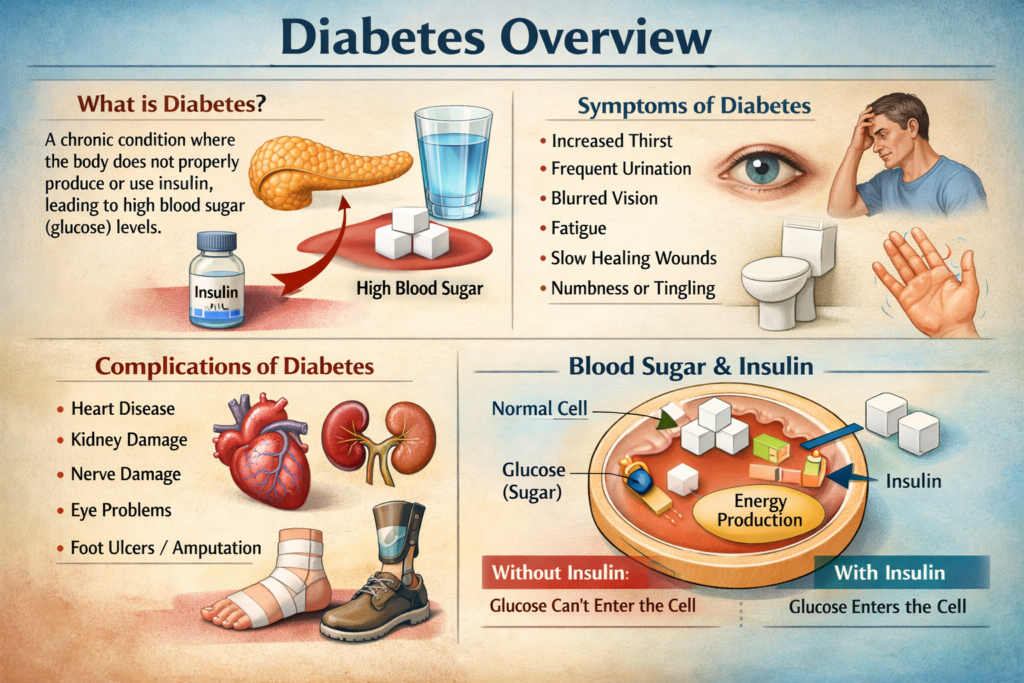
Insulin resistance is the single most significant driver of MASLD. When cells stop responding properly to insulin, the body produces more of it. Excess insulin signals the liver to produce and store more fat. Over time, fat accumulates in liver cells faster than the liver can process it. Insulin resistance often develops silently, years before type 2 diabetes is diagnosed. Many people with fatty liver disease have insulin resistance without knowing it.
Excess body weight — particularly abdominal fat
Carrying excess weight — especially around the abdomen — significantly increases fatty liver risk. Visceral fat, the fat stored around the organs rather than under the skin, releases fatty acids directly into the portal vein that supplies the liver. This creates a direct and continuous fat load on the liver that exceeds its processing capacity.
Poor dietary habits
A diet high in ultra-processed foods, refined carbohydrates, added sugars — particularly fructose from sugary drinks — and saturated fats drives fat accumulation in the liver. Fructose is metabolised almost exclusively by the liver. High intake overwhelms its processing capacity and converts directly to liver fat.
Physical inactivity
Regular physical activity improves insulin sensitivity and helps the liver burn fat more effectively. Sedentary lifestyles reduce the liver’s fat-burning capacity and worsen insulin resistance — creating conditions where liver fat accumulates more rapidly.
Other contributing factors
- type 2 diabetes — significantly raises fatty liver risk and accelerates progression
- high triglycerides and low HDL cholesterol
- polycystic ovary syndrome (PCOS) — linked to insulin resistance and elevated fatty liver risk
- hypothyroidism — affects how the liver processes fat
- certain medications — including corticosteroids, tamoxifen, and some antidepressants
- rapid weight loss — paradoxically, very rapid weight loss can temporarily worsen liver fat before improving it
Early Signs of Fatty Liver Disease
Early fatty liver disease is often called a silent condition because most people in Stage 1 and early Stage 2 have no noticeable symptoms. When symptoms do appear, they tend to be vague and easy to attribute to other causes. This is one of the primary reasons fatty liver disease goes undiagnosed for so long in so many people.
Signs that may indicate fatty liver disease
1. Fatigue that does not improve with rest
The liver plays a central role in energy metabolism — converting nutrients into fuel, storing glycogen, and filtering toxins that the brain processes. When the liver is compromised, this process becomes less efficient. Many people with early fatty liver disease report persistent, unexplained fatigue that does not improve with sleep. This is often one of the earliest indicators something is wrong.
2. Discomfort or mild pain in the upper right abdomen
The liver sits under the right rib cage. As it accumulates fat and enlarges, some people feel a dull ache, sense of fullness, or mild discomfort in the upper right side of the abdomen. This is not always present and can be subtle enough to dismiss — but it is worth noting and reporting to a doctor.
3. Elevated liver enzymes on a blood test
Many cases of fatty liver disease are first identified through routine blood tests showing elevated ALT (alanine transaminase) or AST (aspartate transaminase) — enzymes that leak into the bloodstream when liver cells are damaged. Elevated liver enzymes without another clear explanation warrant further investigation, including an abdominal ultrasound. This is the most common way fatty liver disease is detected.
4. Unexplained weight gain around the abdomen
Visceral fat accumulation and insulin resistance — both closely associated with fatty liver disease — tend to produce weight gain specifically around the midsection. A waist circumference above 88cm in women or 102cm in men significantly increases metabolic syndrome risk, which includes fatty liver disease.
5. Increased blood sugar or pre-diabetes
Insulin resistance and fatty liver disease develop together and reinforce each other. Fasting blood glucose levels creeping toward the pre-diabetes range — between 6.0 and 6.9 mmol/L — can signal underlying metabolic dysfunction that includes liver fat accumulation.
6. High triglycerides on a blood test
Elevated triglycerides — fats circulating in the blood — are both a cause and a consequence of fatty liver disease. High triglycerides on a routine cholesterol panel, particularly alongside low HDL cholesterol, form part of the metabolic syndrome picture that strongly links to fatty liver disease.
Symptoms that suggest progression beyond early stage
These symptoms suggest the condition may have progressed to steatohepatitis or fibrosis and require urgent medical attention:
- yellowing of the skin or whites of the eyes (jaundice)
- significant abdominal swelling (ascites)
- spider veins on the skin surface
- confusion or difficulty thinking clearly
- significant unexplained weight loss
- dark urine or pale stools
If any of these symptoms are present, seek medical advice promptly rather than managing at home.
How Fatty Liver Disease Is Diagnosed
If fatty liver disease is suspected, your GP will typically start with blood tests and an abdominal ultrasound.
Blood tests
Elevated ALT and AST liver enzymes suggest liver cell damage. However, normal liver enzymes do not rule out fatty liver disease — up to 80 percent of people with NAFLD have normal enzyme levels. A full liver function panel, fasting glucose, HbA1c, lipid panel, and kidney function tests together provide a much fuller picture of metabolic health and liver status.
Abdominal ultrasound
Ultrasound can detect liver fat accumulation visually. It is the most widely used initial imaging investigation for fatty liver disease and can identify hepatomegaly (enlarged liver) and increased liver echogenicity — both signs of fat infiltration. However, ultrasound cannot reliably detect early-stage fat accumulation or distinguish between simple steatosis and steatohepatitis.
The Enhanced Liver Fibrosis (ELF) test
NICE recommends the ELF blood test to identify adults with advanced fibrosis who need specialist referral. It measures three proteins produced during liver scarring and provides a fibrosis score that helps clinicians decide who needs further investigation.
FibroScan and liver biopsy
A FibroScan uses ultrasound technology to measure liver stiffness — an indicator of fibrosis. It is non-invasive and widely available at liver clinics. Liver biopsy remains the most definitive diagnostic test, but it carries risks and is reserved for cases where non-invasive tests give unclear results or where more detailed staging is needed for treatment decisions.
How to Reverse Fatty Liver Disease
Early-stage fatty liver disease is genuinely reversible. The liver is one of the few organs capable of significant self-repair — and lifestyle changes can produce measurable reductions in liver fat within weeks. Here is what the evidence actually supports.
1. Weight loss — the single most effective intervention
Research consistently identifies weight loss as the most powerful intervention for reversing fatty liver disease. A loss of just 3 to 5 percent of total body weight can reduce liver fat. Losing 7 to 10 percent can reverse inflammation and early fibrosis. Losing 10 percent or more can produce significant improvements even in more advanced cases.
Gradual weight loss of 0.5 to 1 kg per week is recommended. Very rapid weight loss — more than 1.5 kg per week — can temporarily worsen liver inflammation by flooding the liver with fatty acids released from fat tissue faster than it can process them.
2. Diet changes — what to eat and what to reduce
Diet is the primary driver of liver fat accumulation — and the primary tool for reducing it. The following dietary changes have the strongest evidence base for fatty liver disease reversal:
Reduce sugar and refined carbohydrates
Fructose from sugary drinks, fruit juices, and added sugars converts directly to liver fat. Removing or significantly reducing these is one of the highest-impact dietary changes for liver health. Refined carbohydrates — white bread, white rice, pastries, and processed snacks — drive insulin resistance and liver fat accumulation. Replace them with whole grains, legumes, and vegetables where possible.
Follow a Mediterranean-style dietary pattern
A systematic review and meta-analysis published in Clinical Nutrition found that the Mediterranean diet is both effective and well tolerated for reducing liver fat in people with NAFLD. It emphasises vegetables, fruits, whole grains, legumes, olive oil, oily fish, and nuts — and limits red meat, processed food, and added sugars. Multiple studies confirm it reduces liver fat, improves insulin sensitivity, and lowers inflammation markers.
Increase fibre intake
Dietary fibre slows glucose absorption, reduces insulin spikes, and feeds beneficial gut bacteria that produce short-chain fatty acids protective against liver inflammation. Aim for vegetables, legumes, whole grains, and fruits as primary fibre sources.
Reduce ultra-processed food and saturated fat
Ultra-processed food — mass-produced snacks, fast food, sweetened drinks, and ready meals — drives metabolic dysfunction and liver fat accumulation. Saturated fat from processed meats and full-fat dairy products worsens liver inflammation in people with existing fatty liver disease.
Include coffee — genuinely
Multiple studies show that regular coffee consumption — two to three cups per day — links to lower rates of liver fibrosis and reduced liver enzyme levels in people with fatty liver disease. The mechanism involves coffee’s anti-inflammatory and antioxidant compounds. This is one of the more robust dietary findings in liver disease research. Plain black coffee or coffee with a small amount of milk is most beneficial.
3. Exercise — both aerobic and resistance training
Exercise reduces liver fat through two mechanisms. Aerobic exercise — brisk walking, cycling, swimming — improves insulin sensitivity and directly burns liver fat as fuel. Resistance training — weights, bodyweight exercises, resistance bands — builds muscle mass, which improves glucose metabolism and reduces insulin resistance over time.
Research published in the World Journal of Gastroenterology found that resistance training produces significant reductions in liver fat independently of weight loss — meaning exercise benefits the liver even when the scales do not change. A position statement from Exercise and Sport Science Australia recommends at least 150 minutes of moderate aerobic exercise per week, combined with two resistance training sessions, for people with metabolic-associated fatty liver disease.
4. Reduce or eliminate alcohol
Even moderate alcohol consumption worsens liver fat accumulation in people with MASLD — the condition previously classified as non-alcoholic precisely because it affects people who do not drink heavily. For people with any stage of fatty liver disease, reducing alcohol to the lowest possible level or eliminating it entirely is recommended. For alcohol-related fatty liver disease, complete elimination is essential.
5. Manage underlying metabolic conditions
Fatty liver disease and metabolic syndrome develop together and reinforce each other. Managing blood sugar, blood pressure, and cholesterol through diet, exercise, and medication where appropriate directly supports liver recovery. People with type 2 diabetes should work with their GP to optimise blood sugar control — improved glycaemic control directly reduces liver fat.
6. Address sleep and stress
Poor sleep and chronic stress both worsen insulin resistance and drive cortisol-related fat accumulation — including in the liver. Research from Mayo Clinic links sleep deprivation and chronic psychological stress to worsened MASLD outcomes. Addressing sleep quality and developing consistent stress management practices — whether exercise, mindfulness, or social connection — supports liver recovery as part of a complete approach.
7. Medical treatments — what is currently available
In 2024, the FDA approved the first drug specifically for NASH — resmetirom (brand name Rezdiffra) — for adults with moderate to advanced fibrosis. This is a significant milestone in the treatment of fatty liver disease. However, it is a prescription medication for people with confirmed steatohepatitis and fibrosis, not a first-line treatment for early fatty liver disease. Lifestyle change remains the foundation of treatment at all stages.
Some GPs may also recommend vitamin E supplementation for non-diabetic adults with confirmed NASH, based on evidence of its anti-inflammatory effects on liver tissue. This should only be taken under medical guidance, as high-dose vitamin E carries risks in certain populations.
How Long Does It Take to Reverse Fatty Liver Disease?
Recovery time depends on the stage of the condition and the consistency of lifestyle changes. Research provides the following general timelines:
- Stage 1 (simple steatosis): measurable reductions in liver fat can occur within 4 to 12 weeks of consistent dietary change and exercise. Full reversal is achievable within 3 to 6 months with sustained effort.
- Stage 2 (steatohepatitis): improvement typically takes 6 to 12 months of sustained lifestyle change. Inflammation markers can improve significantly within this period, though full resolution takes longer.
- Stage 3 (fibrosis): some reversal of early fibrosis is possible with significant and sustained lifestyle change over 12 to 24 months. Medical support and monitoring are important at this stage.
Progress can be tracked through repeat liver function blood tests and, where appropriate, FibroScan or repeat ultrasound. Many people notice improvements in energy, blood sugar, and weight well before imaging changes become visible — these subjective improvements are meaningful indicators that the approach is working.
When to See a Doctor About Fatty Liver Disease
See your GP if:
- you have been told your liver enzymes are elevated and no explanation has been given
- you have type 2 diabetes, metabolic syndrome, or obesity and have not had your liver health assessed
- you experience persistent fatigue, right-sided abdominal discomfort, or unexplained weight changes
- you have a family history of liver disease
- you experience any of the symptoms suggesting progression — jaundice, abdominal swelling, confusion, or dark urine
Fatty liver disease is a condition where early detection genuinely changes outcomes. A simple blood test and ultrasound can provide a clear picture of where you stand — and early intervention is significantly more effective than waiting for symptoms to appear.
For more on how eating patterns and metabolic health connect, read our article on Is Eating Clean a Scam? Reframing Your Relationship with Processed Food.
The NHS guide to non-alcoholic fatty liver disease provides comprehensive information on symptoms, diagnosis, treatment, and when to seek medical advice.
Key Takeaways
- Fatty liver disease affects approximately 1 in 4 adults globally and most people have no symptoms in the early stages — it is most often detected through elevated liver enzymes on a routine blood test.
- The condition progresses through four stages: simple steatosis, steatohepatitis, fibrosis, and cirrhosis. Early stages are fully reversible. Later stages become increasingly difficult to reverse.
- Insulin resistance, excess abdominal fat, high sugar intake, physical inactivity, and ultra-processed food are the primary drivers of metabolic fatty liver disease.
- Weight loss of just 3 to 5 percent of total body weight can reduce liver fat. Losing 7 to 10 percent can reverse inflammation and early fibrosis.
- A Mediterranean-style diet, reduced sugar and refined carbohydrates, regular aerobic and resistance exercise, and reduced alcohol intake are the most evidence-supported lifestyle interventions.
- Regular coffee consumption — two to three cups daily — links to lower rates of liver fibrosis and reduced liver enzymes in people with fatty liver disease.
- The FDA approved the first drug specifically for advanced fatty liver disease in 2024 — but lifestyle change remains the foundation of treatment at all stages.
Final Thoughts
Fatty liver disease is one of the few serious health conditions where early action can genuinely reverse the damage. The liver is remarkably resilient. Given the right conditions — reduced fat intake, improved insulin sensitivity, regular movement, and less alcohol — it can shed accumulated fat and restore its function to near normal.
The challenge is that most people do not know they have it until a routine test reveals it. If you have risk factors — excess weight, type 2 diabetes, metabolic syndrome, high triglycerides, or a sedentary lifestyle — asking your GP to check your liver health is one of the most practical things you can do. A simple blood test could give you information that changes the trajectory of your health for decades to come.
Act early. The window for reversal is real — and it is wider than most people realise.
Medical Disclaimer: The information on this page is provided for educational and informational purposes only and is not intended as medical advice. It should not replace consultation with a qualified healthcare professional. For full details, please read our Disclaimer.