Most of what people believe about staying hydrated is built on hydration myths rather than science. Drink eight glasses of water a day. Coffee dehydrates you. Thirst means you are already dehydrated. Clear urine means you are properly hydrated. These ideas have been repeated so often that most people accept them as fact — but the research behind them is far weaker than their cultural persistence suggests.
A systematic review published in JAMA Network Open in 2024 examined outcomes across randomised clinical trials testing changes in daily water intake. The findings were nuanced — increased water intake showed benefits in specific contexts such as kidney stone prevention and weight management, but the blanket rule that everyone needs eight glasses of plain water daily found no consistent scientific basis. Understanding the real evidence behind hydration helps you make better decisions for your body — without unnecessary anxiety about whether you have drunk enough today.
This article tackles the most persistent hydration myths, explains what the science actually says, and gives you a practical, evidence-based picture of how much fluid you genuinely need.
To understand how nutrition and dietary habits connect to long-term health, read our guide on Inflammation 101: How to Know if You Have It and What to Eat Next.
The Biggest Hydration Myths — Debunked
Hydration myth 1 — You need eight glasses of water every day
The eight glasses a day rule is the most widespread hydration myth in existence. Most people assume it is grounded in solid clinical research. It is not.
The rule traces back to a 1945 recommendation from the US Food and Nutrition Board. That recommendation suggested adults consume approximately 2.5 litres of water daily. The critical part — which was widely overlooked — was the very next sentence: most of that quantity is contained in prepared foods. The guideline never meant that people should drink eight separate glasses of plain water on top of everything else they eat and drink. Decades of repetition transformed a nuanced guideline about total fluid intake into a rigid daily prescription for plain water consumption.
The National Academies of Sciences, Engineering, and Medicine recommends total daily water intake of approximately 3.7 litres for men and 2.7 litres for women — from all sources combined. That sounds like a large amount until you recognise that a significant proportion comes from food. Fruits and vegetables have very high water content. Cucumbers, celery, watermelon, strawberries, and oranges are largely water by weight. Soups, stews, milk, juice, and even coffee and tea all contribute to daily fluid intake.
What matters is total fluid from all sources — not eight glasses of plain water specifically.
Hydration myth 2 — Coffee dehydrates you
Caffeine is a mild diuretic — it increases urine production. This fact gave rise to the belief that coffee and tea dehydrate you. However, the diuretic effect of caffeine at typical consumption levels is modest and offset by the fluid volume of the drink itself.
A 2008 review in Nutrition Bulletin found that caffeine intakes up to 400mg per day — equivalent to approximately four cups of coffee — did not cause clinically meaningful dehydration in healthy adults. Holly Gilligan, clinical dietitian at the University of Rochester Medicine, confirms that research shows the fluid in caffeinated drinks balances the diuretic effect of typical caffeine levels. An associate professor of exercise and sport science at Wayne State University, Tamara Hew-Butler, makes this point plainly: the diuretic effect of caffeine is real, but it is not enough to affect hydration for most people drinking normal amounts.
Coffee and tea count toward your daily fluid intake. They are not perfectly equivalent to water — very high caffeine consumption can tip the balance — but moderate consumption does not cause dehydration.
Hydration myth 3 — Thirst means you are already dehydrated
This myth — that thirst is a late signal that arrives only after dehydration has begun — became widespread in athletic and fitness culture. It has some basis in specific contexts but does not apply to healthy adults in everyday life.
For most healthy people in normal conditions, thirst is a reliable real-time indicator of hydration needs. The body’s thirst mechanism is sensitive and responds to relatively small changes in blood concentration. Researchers at McGill University note that for most healthy adults, drinking when thirsty and not drinking when not thirsty is sufficient to maintain adequate hydration without consciously counting glasses.
The nuance is important. Thirst can become less reliable in specific populations. Older adults experience a reduced thirst sensation — their thirst mechanism becomes less sensitive with age, meaning they may not feel thirsty even when mildly dehydrated. This is a well-documented physiological change that makes conscious hydration habits more important as people age. Children also sometimes ignore thirst signals when absorbed in play. People on certain medications may have altered thirst responses.
For healthy adults in normal conditions, however, thirst is a trustworthy guide rather than a late warning sign.
Hydration myth 4 — Your urine should be clear to show you are hydrated
Pale yellow urine — the colour of diluted lemonade — is the target, not completely clear urine. Consistently clear urine can indicate overhydration — drinking more water than the body needs, which dilutes blood sodium and places unnecessary strain on the kidneys.
Urine colour provides a practical hydration guide:
- Pale yellow to straw coloured: well hydrated — this is the target range
- Clear: potentially overhydrated — reduce fluid intake slightly
- Dark yellow: mildly dehydrated — drink more fluid
- Amber or brown: significantly dehydrated — drink water and seek medical advice if this persists
Note that certain vitamins, medications, and foods — including B vitamins, beetroot, and asparagus — temporarily change urine colour independent of hydration status. A single dark reading after taking a B vitamin supplement does not mean you are dehydrated.
Hydration myth 5 — Drinking more water flushes out toxins
The idea that drinking large amounts of water removes toxins from the body is one of the most persistent wellness myths across multiple health categories. The body does not work this way. The kidneys, liver, and lymphatic system filter waste products from the blood and eliminate them through urine, faeces, and exhalation. These organs require adequate hydration to function — but they do not function better with dramatically increased water intake beyond what the body needs.
A randomised trial examining kidney function published by McGill University researchers found that encouraging people with kidney disease to drink more water produced no benefit in kidney function compared to maintaining normal fluid intake. Adequate hydration supports the kidneys’ filtering function. Excessive hydration does not enhance it.
Hydration myth 6 — Sports drinks are better than water for everyday hydration
Sports drinks containing electrolytes and carbohydrates are formulated for sustained intense exercise lasting more than 60 to 90 minutes — not for everyday hydration or low-intensity activity. For most people’s daily hydration needs, water is more appropriate and significantly lower in sugar and calories than commercial sports drinks.
The electrolytes in sports drinks — sodium, potassium, and magnesium — do matter after prolonged sweating. However, most people replace these adequately through normal food intake without needing supplemental sports drinks. Choosing sports drinks as a regular hydration strategy adds unnecessary sugar to the diet without meaningful benefit for people who are not engaged in sustained intense physical activity.
Hydration myth 7 — You can drink too much water easily
Overhydration — technically called hyponatraemia — occurs when sodium in the blood becomes diluted to dangerous levels by drinking far more water than the kidneys can process. It is genuinely harmful and has caused deaths, including a widely reported case in 2023 of a mother who passed away after drinking excessive amounts of water too quickly during an extreme health challenge.
However, overhydration from simply drinking too much water over a normal day is very uncommon in healthy adults with functioning kidneys. The kidneys can process approximately one litre of fluid per hour. Reaching dangerous overhydration levels through normal everyday drinking is extremely difficult for most people. The risk applies primarily to people who drink very large volumes in a short period — most commonly seen in endurance athletes, people following extreme detox protocols, or those with kidney or hormonal conditions affecting fluid regulation.
How Much Fluid Do You Actually Need?
Understanding hydration myths is only useful if it helps you identify what good hydration actually looks like. The honest answer is that individual needs vary significantly based on several factors.
What determines your personal hydration needs
- Body size: larger bodies contain more water and have higher total fluid requirements than smaller bodies
- Activity level: physical activity increases fluid loss through sweat. Someone exercising vigorously for an hour needs significantly more fluid than someone sedentary for the same period
- Climate and temperature: hot weather increases sweat rate and fluid loss. Humidity affects how efficiently sweat cools the body. People in hot climates or working outdoors need more fluid than those in temperate, air-conditioned environments
- Diet composition: people eating diets rich in fruits, vegetables, and soups receive a significant portion of their daily fluid from food. People eating predominantly dry, processed foods receive very little fluid from what they eat and need to drink more
- Age: older adults have reduced thirst sensitivity and reduced total body water. Conscious attention to hydration becomes more important after age 65
- Health status: certain conditions — kidney disease, heart failure, diabetes insipidus — affect fluid requirements significantly. Medications including diuretics also alter hydration needs. Speak with your GP if you have a health condition that may affect your fluid balance
- Pregnancy and breastfeeding: both increase fluid requirements. The NHS recommends that pregnant and breastfeeding women increase their fluid intake above their usual baseline
A practical framework for daily hydration
Rather than counting glasses, these practical markers provide a more reliable picture of your hydration status:
- Urine colour: aim for pale yellow throughout the day. Check first thing in the morning — darker morning urine is normal after overnight sleep, but if it remains dark by mid-morning after drinking regularly, increase your fluid intake
- Thirst: drink when you feel thirsty. Do not force fluid intake if you are not thirsty and your urine is pale yellow. For older adults, drink at regular intervals rather than relying on thirst alone
- General guideline: the Dietary Reference Intakes recommend women take in at least 2.2 litres of total fluid daily and men at least 3.0 litres — from all sources including food and beverages, not plain water alone
- After exercise: weigh yourself before and after prolonged exercise. Each kilogram of body weight lost represents approximately one litre of fluid lost. Replace that fluid gradually over the following hours rather than all at once
Signs of genuine dehydration worth knowing
Mild to moderate dehydration produces recognisable signs:
- dark yellow or amber urine
- reduced urine frequency — urinating fewer than four times daily
- dry mouth and increased thirst
- headache — particularly in the afternoon
- reduced concentration and mental fatigue
- muscle cramps during or after exercise
- dizziness on standing
Severe dehydration — producing confusion, rapid heart rate, sunken eyes, inability to urinate, or extreme weakness — requires medical attention. It does not develop from missing one glass of water. It typically results from significant fluid loss through illness, extreme heat, or prolonged intense exercise without replacement.
What Actually Helps You Stay Hydrated
Understanding hydration myths makes it easier to build practical habits that genuinely support good hydration — without unnecessary rigidity or anxiety about glass counts.
Eat water-rich foods
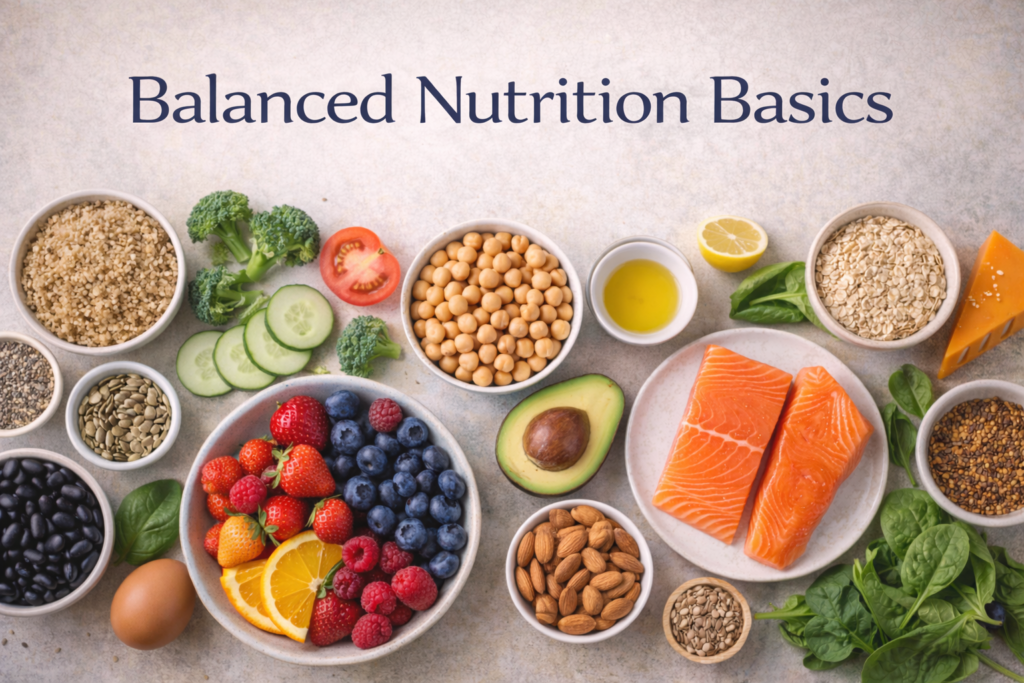
A diet rich in vegetables, fruits, soups, and stews contributes significantly to daily fluid intake. Cucumbers, lettuce, celery, tomatoes, courgettes, strawberries, watermelon, and oranges are between 85 and 97 percent water by weight. People who eat abundant vegetables and fruits reach adequate hydration with less deliberate drinking than those eating predominantly dry, processed food.
Keep water visible and accessible
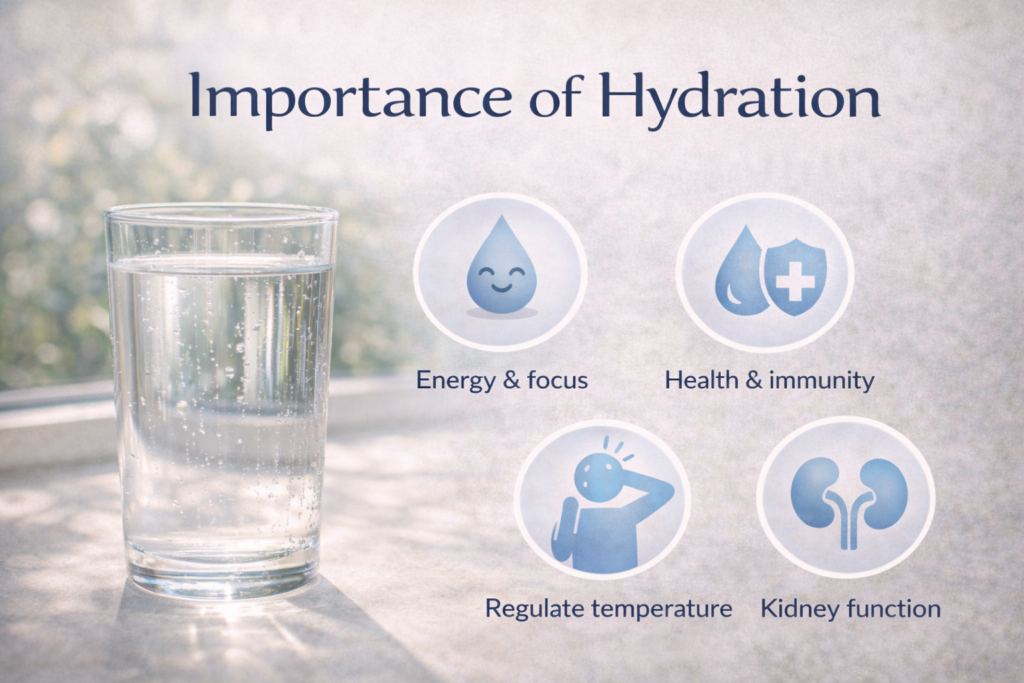
Behaviour research consistently shows that people drink more water when a glass or bottle is visible and accessible. Keeping water on your desk, on the kitchen counter, and beside your bed removes the effort barrier that prevents incidental drinking throughout the day. A reusable water bottle carried throughout the day is one of the simplest and most effective hydration habits available.
Drink consistently rather than in large volumes
Spreading fluid intake across the day is more effective than drinking large volumes at once. The kidneys can process approximately one litre per hour. Drinking two litres over two hours is less effective than drinking two litres steadily across twelve hours — because excess fluid consumed faster than the kidneys can process it is simply excreted rather than absorbed.
Increase intake during exercise, heat, and illness
These three situations increase fluid loss significantly and require conscious increases in intake beyond your usual baseline. During illness with fever, vomiting, or diarrhoea, oral rehydration salts — not plain water alone — better replace the electrolytes lost alongside fluid.
For more on how nutritional approaches affect metabolism and energy, read our article on Vertical Dieting for Home Cooks: Maximising Nutrients When You Are Busy.
The NHS guide to water and drinks provides evidence-based guidance on daily fluid intake recommendations, what counts toward your fluid intake, and how to recognise dehydration.
Key Takeaways
- The most common hydration myths — including the eight glasses a day rule — are not supported by the current science and originated from a 1945 guideline that was widely misinterpreted.
- The National Academies of Sciences recommends total daily water intake of 3.7 litres for men and 2.7 litres for women — from all sources including food and all beverages, not plain water alone.
- Coffee and tea at normal consumption levels do not cause dehydration. The diuretic effect of caffeine is offset by the fluid content of the drink at intakes up to 400mg per day.
- For healthy adults, thirst is a reliable real-time hydration guide. However, older adults experience reduced thirst sensitivity and benefit from drinking at regular intervals rather than relying on thirst alone.
- Pale yellow urine — not clear urine — is the target. Clear urine can indicate overhydration. Dark yellow urine indicates you need more fluid.
- Overhydration is real but uncommon in healthy adults through normal daily drinking. The risk applies primarily to people consuming very large volumes over short periods.
- Eating water-rich foods, keeping water visible and accessible, and drinking consistently across the day are the most practical and evidence-supported hydration strategies.
Final Thoughts
Good hydration is simpler than the hydration myths surrounding it suggest — and more flexible than the eight glasses rule implies. Your body has a reliable signalling system for when it needs more fluid. Your urine provides a visible daily indicator of whether your intake is adequate. The foods you eat contribute meaningfully to your hydration. And practically every non-alcoholic beverage you consume counts toward your daily fluid total.
Drink when you are thirsty. Eat your vegetables. Check your urine colour. Increase your intake in heat, during exercise, and when you are unwell. Beyond that, you likely do not need to count, track, or worry.
Hydration is important. It is also not complicated — once you move past the myths.
Medical Disclaimer: The information on this page is provided for educational and informational purposes only and is not intended as medical advice. It should not replace consultation with a qualified healthcare professional. For full details, please read our Disclaimer.