Stress is a natural part of life. It shows up when demands feel high, time feels short, or situations feel uncertain. In small doses, stress can be helpful, it can sharpen focus and motivate action. But when stress becomes constant or overwhelming, it can start to affect both mental and physical health in noticeable ways.
Many people live with stress for long periods without realizing how deeply it influences their body, emotions, and daily habits. Understanding what stress is and how it affects the body and mind helps people recognize early signs and respond with care rather than exhaustion.
What It Is
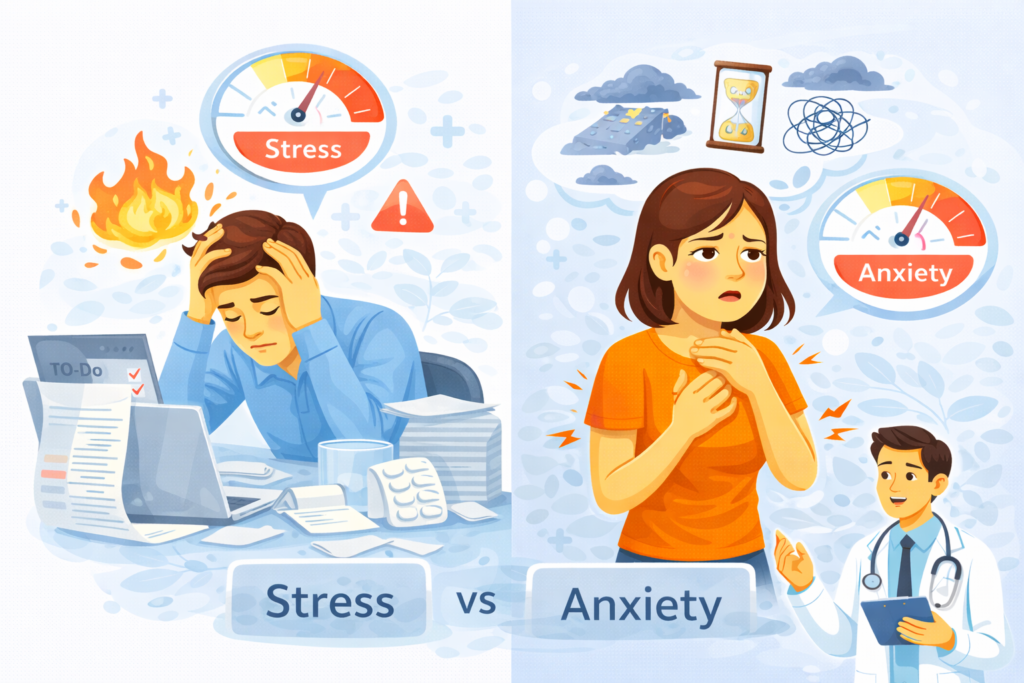
Stress is the body’s response to perceived pressure or challenge. When the brain senses a threat—whether physical, emotional, or psychological, it activates a stress response designed to help the body cope.
This response involves the release of stress-related hormones that prepare the body for action. Heart rate may increase, muscles may tense, and attention may become more focused. While this response is useful in short-term situations, ongoing activation can place strain on multiple body systems.
Stress can be acute, such as stress before an exam or presentation, or chronic, where pressure feels ongoing and difficult to escape.
Common Causes or Risk Factors
Stress can come from many areas of life, and its sources often overlap. Common causes or risk factors may include:
- Work or academic pressure, including deadlines and performance demands
- Financial concerns or uncertainty
- Relationship challenges, such as conflict or caregiving responsibilities
- Major life changes, including relocation, illness, or loss
- Health-related worries, personal or involving loved ones
- Lack of rest or recovery time
- Chronic exposure to pressure, without adequate support
What feels stressful to one person may feel manageable to another. Stress is shaped by personality, past experiences, and available coping resources.
Signs and Symptoms
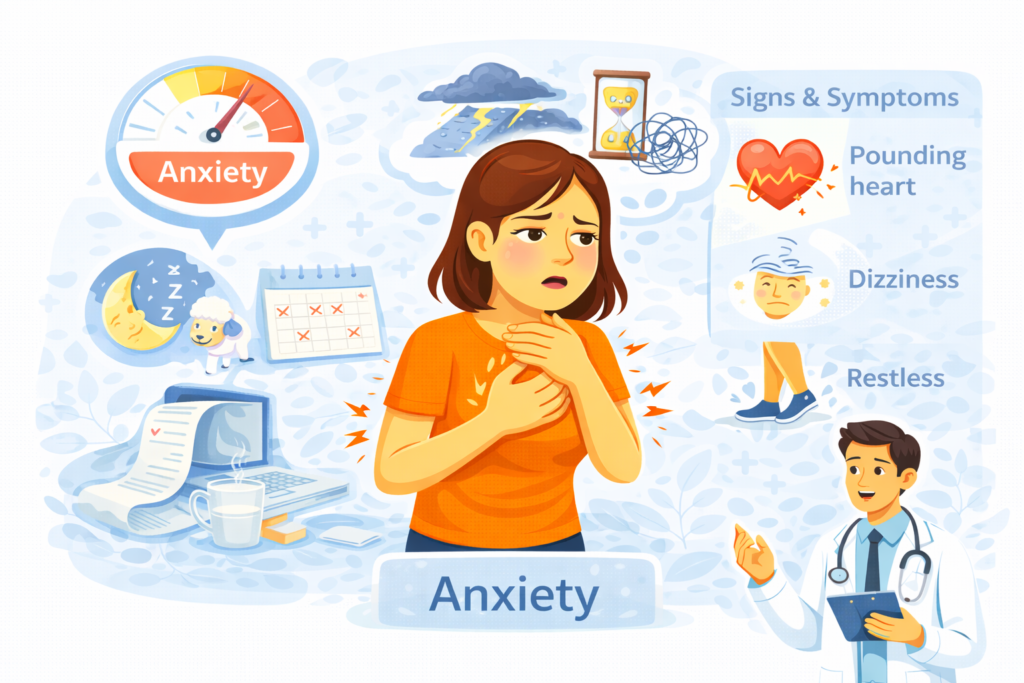
Stress can affect the body, emotions, and behavior. Symptoms may be subtle at first and build gradually over time. Common signs and symptoms may include:
Physical effects
- Muscle tension or aches
- Headaches
- Fatigue or low energy
- Changes in appetite or digestion
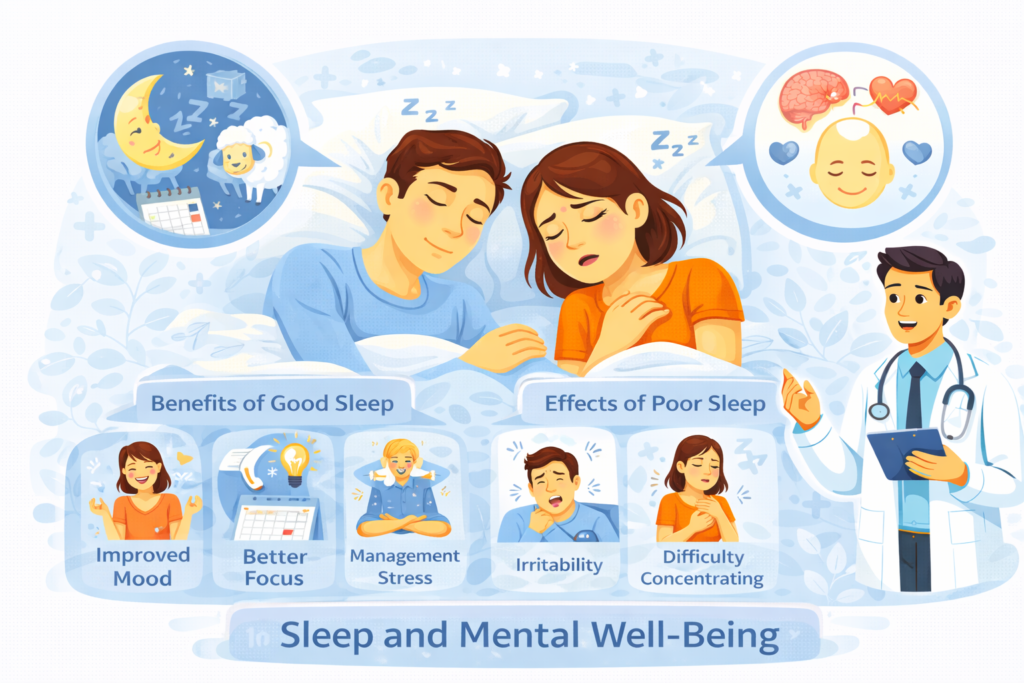
- Sleep disturbances
Emotional and mental effects
- Feeling overwhelmed or irritable
- Difficulty concentrating
- Restlessness or feeling “on edge”
- Increased worry or anxious thoughts
Behavioral effects
- Withdrawal from social activities
- Changes in routine or motivation
- Relying more on unhealthy coping habits
The symptoms can look different from person to person and may change depending on life circumstances.
How It Is Identified or Evaluated
This natural response is usually identified through conversation with a healthcare or mental health professional. Evaluation often includes discussing daily pressures, emotional well-being, sleep patterns, and how stress affects work, relationships, and physical health.
Rather than focusing on one symptom, professionals look at the overall pattern of stress and how long it has been present. This broader view helps guide supportive care.
General Management and Care
General care for stress focuses on restoring balance and building resilience. At a high level, management may include:
- Lifestyle adjustments, such as improving sleep, nutrition, and daily structure
- Stress-management strategies, including relaxation and coping skills
- Physical activity, which can help regulate stress hormones
- Emotional support, from trusted people or professionals
- Setting boundaries, to reduce ongoing overload
Effective stress care often involves small, consistent changes rather than drastic steps.
Prevention or Risk Reduction
Stress cannot be eliminated entirely, but certain habits may help reduce its impact over time. These may include:
- Prioritizing rest and recovery
- Creating realistic schedules and expectations
- Staying socially connected
- Practicing regular stress-relief techniques
- Paying attention to early warning signs of overload
Prevention focuses on balance, awareness, and self-care rather than avoiding responsibility.
When to See a Healthcare Professional
It may be helpful to seek professional support if stress feels constant, overwhelming, or begins to interfere with sleep, relationships, work, or physical health. Evaluation is also important if stress contributes to ongoing anxiety, low mood, or physical symptoms that do not improve.
Early support can help prevent long-term strain and improve overall well-being.
Key Takeaways
- Stress is the body’s response to perceived pressure and can be acute or chronic.
- Common causes of stress include work pressure, financial concerns, and major life changes.
- Stress affects the body, emotions, and behavior, leading to symptoms like muscle tension, irritability, and fatigue.
- Management strategies for stress involve lifestyle adjustments, physical activity, emotional support, and stress-relief techniques.
- Seek professional help if stress becomes overwhelming or impacts daily functioning.
Medical Disclaimer:
The information on this page is provided for educational and informational purposes only and is not intended as medical advice. It should not replace consultation with a qualified healthcare professional. For full details, please read our Disclaimer.