Daily stress is something most people live with, often without realizing how much it adds up. It can come from work responsibilities, family needs, financial pressure, health concerns, or simply trying to keep up with everyday life. While small amounts of stress are normal, constant stress without relief can slowly wear down emotional and physical well-being.
Learning how to cope with daily stress does not mean eliminating challenges from life. Instead, it means building habits and skills that help the mind and body respond more calmly, recover more quickly, and stay balanced over time.
What It Is
Coping with daily stress refers to the ways individuals respond to routine pressures and demands. Coping strategies can be emotional, mental, physical, or social, and they influence how stress affects the body and mind.
Healthy coping does not remove stress entirely, but it helps prevent stress from becoming overwhelming. Over time, effective coping can improve emotional resilience, decision-making, and overall quality of life.
Everyone copes differently, and strategies that work well for one person may not feel helpful for another.
Common Causes or Risk Factors
Daily stress can arise from many overlapping sources. Common contributors may include:
- Work or academic demands, including deadlines and multitasking
- Financial responsibilities or uncertainty
- Family and caregiving roles, which may involve emotional labor
- Time pressure, feeling rushed or overcommitted
- Lack of rest, which reduces stress tolerance
- Ongoing emotional strain, without enough recovery
Stress tends to feel more intense when multiple pressures occur at the same time.
Signs and Symptoms
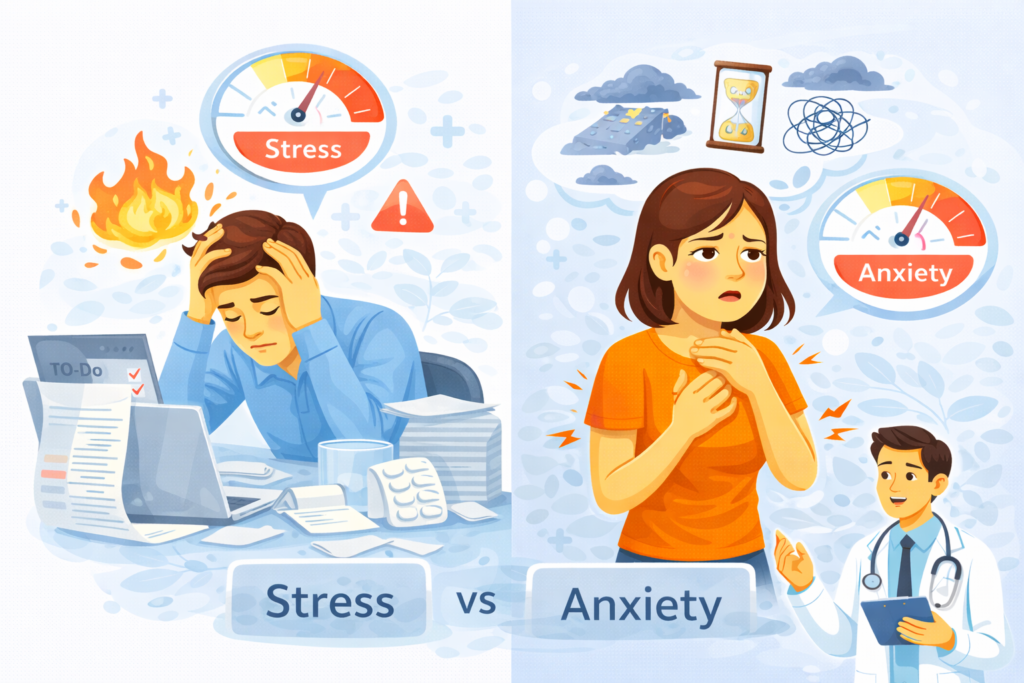
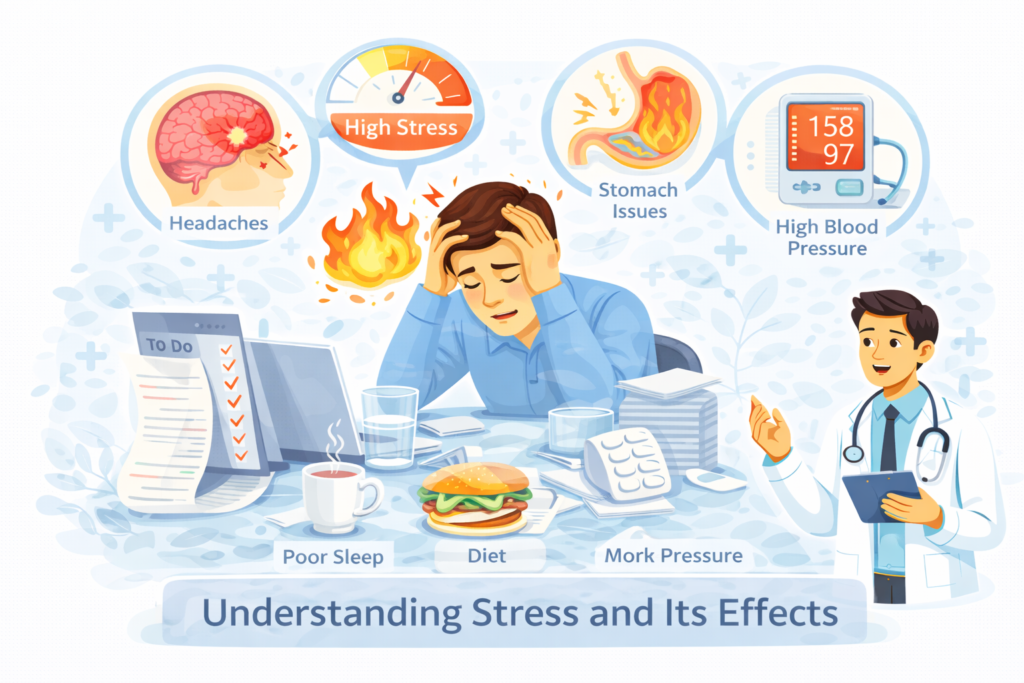
When daily stress is not well managed, signs may appear gradually. Common symptoms may include:
- Feeling tense or easily irritated
- Difficulty relaxing, even during downtime
- Fatigue or low energy
- Trouble concentrating or staying focused
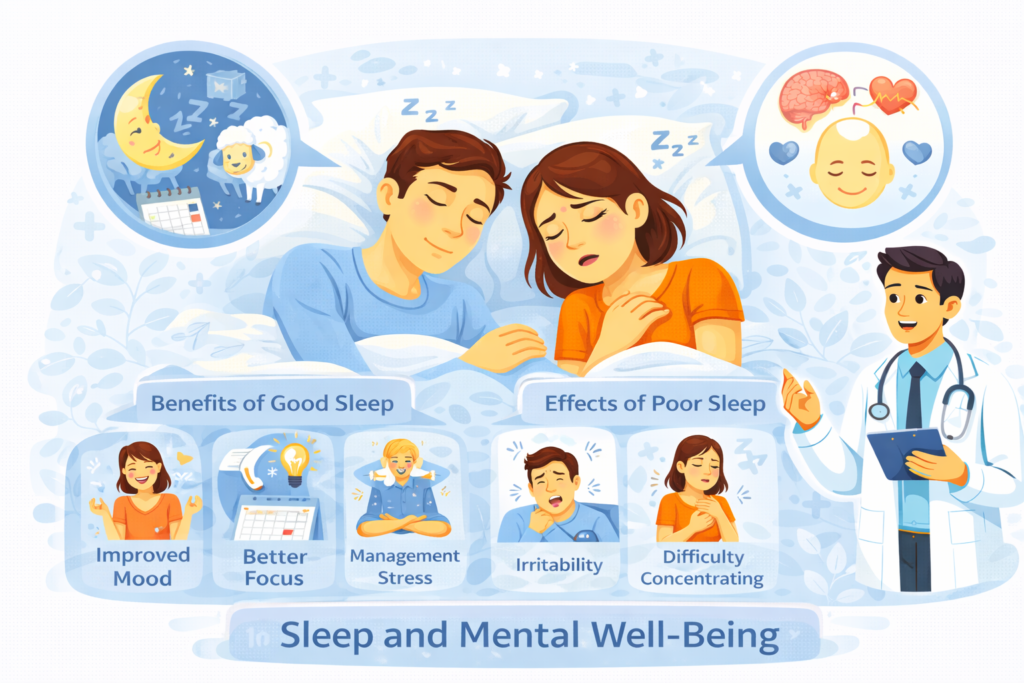
- Changes in sleep or appetite
- Physical tension, such as headaches or muscle aches
These signs are often signals that the body and mind need support, not criticism.
How It Is Identified or Evaluated
Daily stress is usually identified through self-awareness or discussion with a healthcare or mental health professional. Evaluation often involves talking about daily routines, emotional load, sleep patterns, and how stress affects mood, energy, and relationships.
Professionals look at patterns over time rather than isolated stressful days. This helps determine whether stress levels are manageable or beginning to affect well-being.
General Management and Care
Managing daily stress focuses on building sustainable coping habits. At a high level, this may include:
- Establishing routines, which provide structure and predictability
- Stress-management practices, such as relaxation or mindfulness
- Physical activity, which helps regulate stress responses
- Setting boundaries, to reduce overload
- Social support, through connection and shared experiences
Effective stress coping often involves small, consistent changes rather than major life overhauls.
Prevention or Risk Reduction
While daily stress cannot be avoided entirely, certain habits may reduce its impact. These may include:
- Planning realistic schedules
- Taking short breaks during the day
- Getting adequate sleep
- Staying physically active
- Allowing time for rest and enjoyment
- Paying attention to early signs of overwhelm
Prevention focuses on balance and recovery rather than constant productivity.
When to See a Healthcare Professional
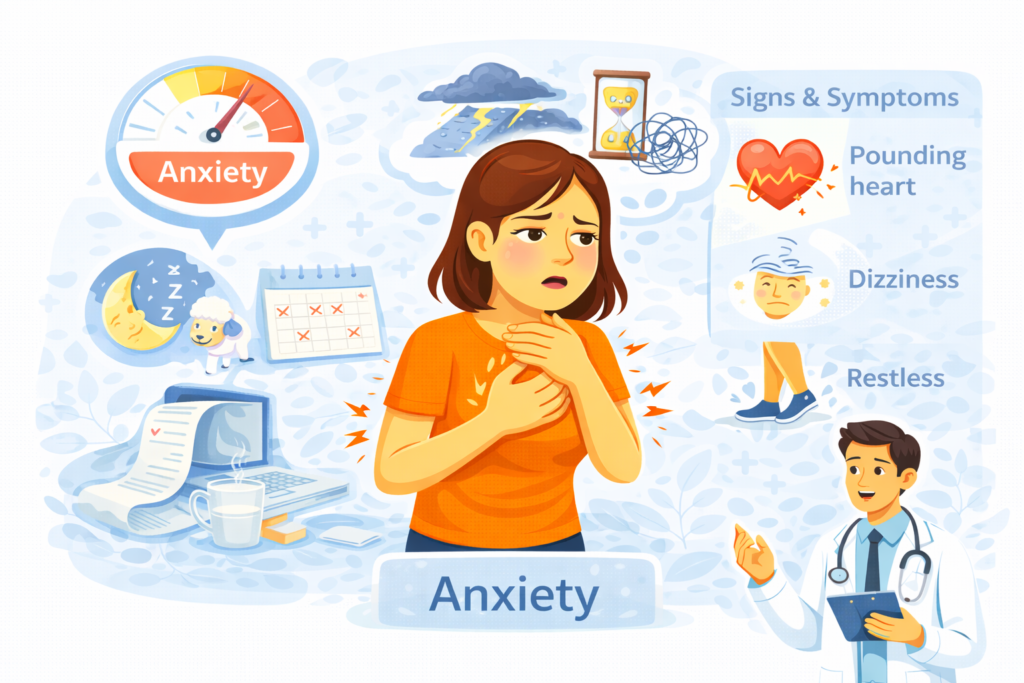
It may be helpful to seek professional support if daily stress feels constant, overwhelming, or begins to affect sleep, mood, relationships, or physical health. Evaluation is especially important if stress contributes to anxiety, burnout, or emotional exhaustion.
Early guidance can help individuals develop healthier coping strategies and prevent long-term strain.
Key Takeaways
- Coping with daily stress involves developing habits to respond calmly and maintain balance over time.
- Common causes include work demands, financial pressures, family roles, and lack of rest.
- Signs of unmanaged stress include tension, irritability, fatigue, and changes in sleep or appetite.
- Effective management focuses on routines, stress-management practices, social support, and setting boundaries.
- Seek professional help if daily stress becomes overwhelming or affects well-being.
Medical Disclaimer:
The information on this page is provided for educational and informational purposes only and is not intended as medical advice. It should not replace consultation with a qualified healthcare professional. For full details, please read our Disclaimer.