Your blood pressure numbers are two of the most important health measurements your body produces — and most people have no idea what they actually mean. They know that high blood pressure is bad. They know they should keep it under control. But when a nurse tells them their reading is 128 over 84, they nod politely and leave without truly understanding what that number says about their heart, their arteries, or their long-term health risk.
High blood pressure — hypertension — affects more than 1 in 3 adults globally and causes over 10 million deaths annually, according to 2025 research published in a peer-reviewed cardiovascular journal. It is the single leading modifiable risk factor for cardiovascular disease, stroke, and kidney failure worldwide. Yet it produces no symptoms in the vast majority of people who have it. Many people live with dangerously elevated blood pressure for years without knowing — which is precisely why understanding your numbers matters so much.
This article explains exactly what your blood pressure numbers mean, what every category tells you about your cardiovascular risk, what the 2025 updated guidelines say, and what to do if your numbers are not where they should be.
To understand how inflammation connects to cardiovascular risk and blood pressure, read our guide on Inflammation 101: How to Know if You Have It and What to Eat Next.
What Do Blood Pressure Numbers Actually Measure?
A blood pressure numbers reading consists of two figures written as one number over another — for example, 120/80 mmHg. Each number measures a different phase of your heart’s pumping cycle. Both matter for understanding cardiovascular health.
The top number — systolic pressure
The top number measures the pressure in your arteries when your heart beats and pumps blood outward. Dr Niteesh Choudhry, a professor of medicine at Harvard Medical School, describes it clearly: the systolic number tells us how much pressure there is from blood pushing against the walls of your arteries when the heart beats. Systolic pressure is typically the higher of the two numbers. Research has historically focused more on systolic pressure because it links most strongly to cardiovascular outcomes including stroke and heart attack.
The bottom number — diastolic pressure
The bottom number measures the pressure in your arteries between heartbeats — when your heart is at rest and refilling with blood. Dr Choudhry describes this as the amount of pressure from blood pushing against the artery walls when the heart is at rest. Diastolic pressure matters particularly for younger adults. Isolated elevated diastolic pressure — a high bottom number with a normal top number — carries its own cardiovascular risk that is sometimes overlooked.
What mmHg means
Blood pressure measures in millimetres of mercury — mmHg. This is a unit inherited from early blood pressure measurement devices that used mercury columns. The number represents how high the pressure in your arteries could push a column of mercury. Higher numbers mean higher pressure in your arteries — and higher pressure over time causes damage to artery walls, the heart, kidneys, and brain.
Blood Pressure Numbers: Understanding Every Category
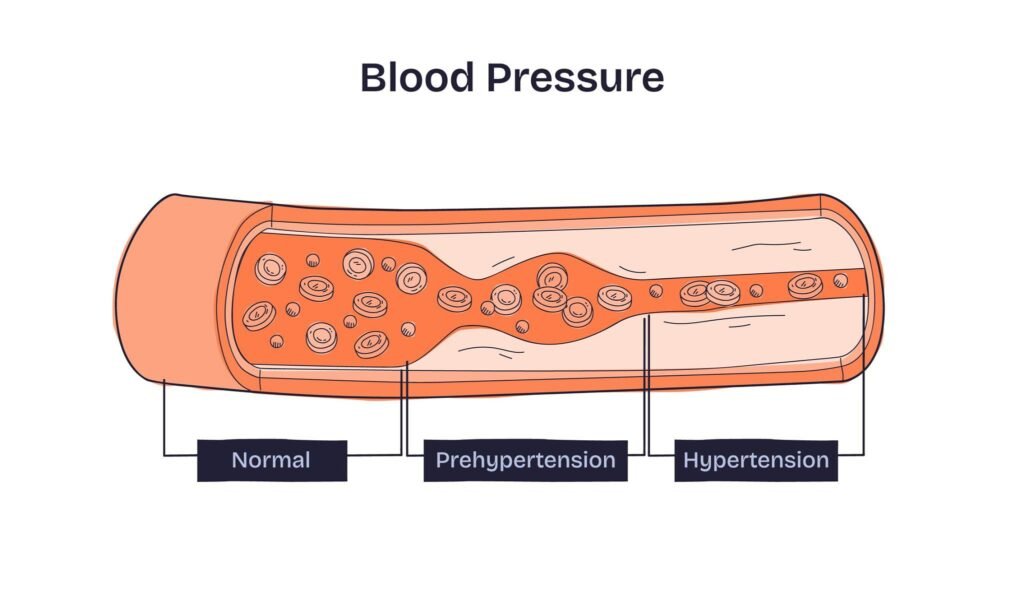
The American Heart Association and American College of Cardiology divide blood pressure numbers into four categories. The 2025 updated guidelines have refined these categories based on new cardiovascular risk data. Here is what each range means for your health.
Normal blood pressure — below 120/80 mmHg
A systolic reading below 120 mmHg and a diastolic reading below 80 mmHg places you in the normal range. This is the target for most adults. At this range, the risk of heart disease, stroke, and kidney damage from blood pressure is minimal. Maintaining normal blood pressure through lifestyle — regular physical activity, a healthy diet, adequate sleep, and stress management — is the most effective long-term cardiovascular protection available.
Elevated blood pressure — 120 to 129 systolic, below 80 diastolic
A systolic reading between 120 and 129 mmHg with a diastolic reading below 80 mmHg is elevated but not yet classified as hypertension. People in this range do not typically need medication. However, they face a higher likelihood of developing hypertension without lifestyle changes. The 2024 European Society of Cardiology guidelines introduced a simplified classification that categorises blood pressure above 120/70 mmHg as “elevated” — a significant shift from previous classifications that would have called these numbers normal. This change reflects growing evidence that cardiovascular risk begins accumulating below the traditional hypertension threshold.
Stage 1 hypertension — 130 to 139 systolic or 80 to 89 diastolic
A consistent reading of 130 to 139 mmHg systolic or 80 to 89 mmHg diastolic meets the current definition of Stage 1 hypertension. At this stage, lifestyle changes are the primary treatment for most people. However, the 2025 AHA/ACC guidelines introduced an important update: people at higher cardiovascular risk — assessed using the new PREVENT calculator, which estimates the ten-year risk of heart disease, stroke, kidney disease, and heart failure — may benefit from starting medication at this stage rather than waiting for blood pressure to climb higher. Your doctor uses your full cardiovascular risk profile, not just your blood pressure reading alone, to decide whether medication is appropriate at Stage 1.
Stage 2 hypertension — 140 or higher systolic or 90 or higher diastolic
A consistent reading of 140 mmHg systolic or higher, or 90 mmHg diastolic or higher, is Stage 2 hypertension. At this level, the combination of lifestyle changes and blood pressure medication is typically recommended. Stage 2 hypertension carries significantly elevated risk of heart attack, stroke, kidney failure, and damage to the blood vessels of the eyes. Most people at this stage need treatment — and the earlier treatment begins, the more damage is prevented.
Hypertensive crisis — above 180 systolic and/or above 120 diastolic
A blood pressure reading above 180 mmHg systolic and/or above 120 mmHg diastolic is a hypertensive crisis — a medical emergency. At this level, blood pressure can damage blood vessels, cause a stroke, trigger a heart attack, or lead to acute kidney failure. If you measure a reading this high, wait five minutes and measure again. If the reading remains that high, call emergency services immediately. Do not drive yourself to hospital.
A hypertensive crisis can occur with symptoms — severe headache, chest pain, shortness of breath, vision changes, or confusion. It can also occur without any symptoms at all. Either way, it requires immediate emergency medical attention.
What Your Blood Pressure Numbers Tell You About Long-Term Risk
Understanding blood pressure numbers goes beyond knowing which category you fall into. The relationship between blood pressure and cardiovascular risk is continuous — meaning risk increases steadily as numbers rise, not in sudden jumps at category boundaries.
The damage that high blood pressure does silently
High blood pressure causes damage through a simple physical mechanism. Persistently elevated pressure batters the walls of arteries with each heartbeat. Over time, this causes the artery walls to thicken and stiffen — a process called arteriosclerosis. Stiff arteries are less efficient at delivering blood to organs. They are also more likely to develop plaques, narrow, and eventually block — producing heart attacks and strokes.
The kidneys filter blood through tiny blood vessels. High pressure damages those vessels progressively. The heart works harder against elevated arterial resistance and enlarges over time. The delicate blood vessels of the retina in the eyes are similarly vulnerable. None of this damage announces itself with symptoms until it is significant — which is why blood pressure earns its description as the silent killer.
Systolic versus diastolic — which matters more?
Both numbers contribute to cardiovascular risk. Research has historically focused more on systolic pressure because it shows a stronger and more consistent link to cardiovascular outcomes across age groups. However, diastolic pressure matters significantly — particularly in younger adults. A 2025 study comparing cardiovascular risk in individuals with normal versus isolated elevated diastolic blood pressure confirmed that elevated diastolic pressure carries meaningful independent cardiovascular risk. Your doctor considers both numbers together, not in isolation.
Blood pressure variability
A single blood pressure reading tells you less than a pattern of readings over time. Blood pressure varies naturally throughout the day — rising in the morning, falling during sleep, and responding to stress, exercise, caffeine, and emotion. A reading taken in a clinic — particularly if you feel anxious — may not reflect your typical blood pressure. This is the basis of two well-recognised phenomena:
- White coat hypertension: blood pressure that reads high in a clinical setting but is normal at home, driven by anxiety about the medical environment. The 2025 AHA/ACC guidelines specifically highlight home blood pressure monitoring as essential for distinguishing white coat hypertension from true hypertension.
- Masked hypertension: blood pressure that reads normal in a clinical setting but is elevated at home or during daily activity. This pattern is particularly dangerous because it may go untreated while causing ongoing damage.
Home blood pressure monitoring — using a validated upper-arm cuff device — provides the most accurate picture of your typical blood pressure. The 2025 guidelines recommend that clinicians use home readings to confirm diagnoses rather than relying on clinic measurements alone.
How to Measure Blood Pressure Numbers Correctly
An American Heart Association study found that only 1 in 7 online images show the correct technique for measuring blood pressure. Incorrect technique produces inaccurate readings — which can lead to both unnecessary treatment and missed diagnoses. Here is how to measure correctly.
Preparation
- avoid caffeine, exercise, and smoking for at least 30 minutes before measuring
- empty your bladder — a full bladder can raise blood pressure by up to 10 mmHg
- sit quietly for five minutes before measuring
- do not talk during the measurement
Positioning
- sit with your back supported and your feet flat on the floor — do not cross your legs
- rest your arm on a flat surface at heart level — not held up or hanging down
- use an upper-arm cuff, not a wrist monitor — wrist monitors are significantly less accurate
- make sure the cuff fits your arm correctly — a cuff that is too small gives falsely high readings, and a cuff that is too large gives falsely low readings
Taking the reading
- take two or three readings one to two minutes apart
- use the average of those readings rather than a single measurement
- measure at the same time of day consistently — ideally morning and evening — to build an accurate picture of your typical blood pressure pattern
- record your readings in a log or app to share with your GP
What Causes High Blood Pressure Numbers?
Understanding what drives high blood pressure numbers is the foundation for changing them. Most hypertension in adults has no single identifiable cause — it develops from the cumulative effect of multiple lifestyle and genetic factors over time. This is called primary or essential hypertension.
Key lifestyle factors that raise blood pressure
- Excess sodium intake: sodium causes the body to retain water, increasing blood volume and therefore blood pressure. The average adult in the UK consumes approximately 8 to 9g of sodium per day — well above the recommended maximum of 6g. Most of this comes from processed food rather than added salt.
- Physical inactivity: regular aerobic exercise lowers resting blood pressure by improving the efficiency of the heart and relaxing blood vessel walls. Sedentary lifestyles allow blood pressure to rise progressively over time.
- Excess body weight: carrying excess weight increases the volume of blood the heart must pump and raises the resistance in blood vessels. Both raise blood pressure.
- Alcohol consumption: regular alcohol consumption raises blood pressure — even at moderate levels. The relationship between alcohol and blood pressure is dose-dependent and significant.
- Chronic stress: stress hormones including cortisol and adrenaline constrict blood vessels and raise heart rate. Chronic psychological stress produces sustained elevations in blood pressure over time.
- Poor sleep: sleep deprivation and sleep disorders — particularly obstructive sleep apnoea — are strongly linked to elevated blood pressure. During normal sleep, blood pressure dips. In people with poor sleep, this dip does not occur — and the cardiovascular system receives no overnight recovery period.
- Smoking: nicotine raises blood pressure immediately and damages artery walls over time, accelerating arteriosclerosis.
Secondary hypertension
In approximately 5 to 10 percent of cases, high blood pressure results from an identifiable underlying condition — called secondary hypertension. Common causes include kidney disease, thyroid disorders, obstructive sleep apnoea, adrenal gland tumours, and certain medications including some contraceptive pills, decongestants, and NSAIDs. Secondary hypertension is suspected when blood pressure is very high, difficult to control, or occurs in a younger person without obvious risk factors.
How to Lower Your Blood Pressure Numbers
Lifestyle changes are the foundation of blood pressure management at every stage. For many people with Stage 1 hypertension and no other cardiovascular risk factors, lifestyle change alone can bring blood pressure numbers back into the normal range without medication.
Evidence-based lifestyle changes
- Reduce sodium intake: cutting sodium from the typical 9g per day to the recommended 6g per day can lower systolic blood pressure by 5 to 6 mmHg in people with hypertension. Check labels on processed food, bread, sauces, and ready meals — these are the primary sources of dietary sodium for most adults.
- Follow the DASH diet: the Dietary Approaches to Stop Hypertension (DASH) diet — emphasising vegetables, fruits, whole grains, low-fat dairy, lean protein, and legumes, while limiting sodium, red meat, and added sugars — consistently reduces systolic blood pressure by 8 to 14 mmHg in clinical trials. It is one of the most evidence-supported dietary interventions for blood pressure management.
- Exercise regularly: 150 minutes of moderate aerobic activity per week — brisk walking, cycling, or swimming — reduces systolic blood pressure by approximately 5 to 8 mmHg. Resistance training adds further benefit when combined with aerobic exercise.
- Limit alcohol: reducing alcohol to no more than 14 units per week — and ideally less — lowers blood pressure meaningfully in people who drink above this level.
- Lose weight if overweight: losing 5 to 10 percent of body weight produces significant reductions in blood pressure — typically 5 to 20 mmHg per 10kg lost in people who are overweight.
- Stop smoking: quitting smoking reduces blood pressure and cardiovascular risk significantly — and within a year of stopping, the excess cardiovascular risk begins to decline toward non-smoker levels.
- Manage stress: mindfulness-based stress reduction, yoga, and other stress management techniques produce modest but consistent reductions in blood pressure across multiple clinical trials.
- Improve sleep: treating obstructive sleep apnoea and addressing poor sleep hygiene can produce meaningful blood pressure reductions in people whose hypertension links to sleep disturbance.
Blood pressure medication
When lifestyle changes are insufficient — or when blood pressure is high enough to require faster reduction — several classes of medication effectively lower blood pressure. These include ACE inhibitors, angiotensin receptor blockers (ARBs), calcium channel blockers, and thiazide diuretics. The right medication depends on your blood pressure level, other health conditions, ethnicity, and age. Your GP makes this decision based on your full clinical picture — not on blood pressure numbers alone.
For more on how lifestyle choices around food and exercise affect cardiovascular risk, read our article on How to Walk 10,000 Steps With a Desk Job (No Gym Required).
The NHS guide to high blood pressure provides comprehensive information on diagnosis, treatment, lifestyle changes, and medication for hypertension — including when to seek medical advice.
When to See a Doctor About Your Blood Pressure Numbers
See your GP if:
- you have never had your blood pressure checked and are over 40 — the NHS Health Check offers free blood pressure testing for adults aged 40 to 74
- you have had a reading of 140/90 or above on more than two separate occasions
- you have a reading consistently in the elevated range — 120 to 129 systolic — and have other cardiovascular risk factors
- you experience symptoms that could indicate a hypertensive crisis — severe headache, chest pain, shortness of breath, sudden vision changes, or confusion
- you are taking blood pressure medication and your readings are not responding as expected
- you have a family history of early heart disease or stroke
If you have a reading above 180 systolic and/or above 120 diastolic, do not wait for a GP appointment. Call emergency services immediately.
Key Takeaways
- Your blood pressure numbers consist of two figures — systolic (top number, pressure when the heart beats) and diastolic (bottom number, pressure when the heart rests between beats) — both measured in mmHg.
- Normal blood pressure is below 120/80 mmHg. Elevated blood pressure is 120 to 129 systolic with diastolic below 80. Stage 1 hypertension is 130 to 139 systolic or 80 to 89 diastolic. Stage 2 hypertension is 140 or above systolic or 90 or above diastolic.
- The 2025 AHA/ACC guidelines recommend that people at higher cardiovascular risk may benefit from blood pressure medication starting at 130/80 mmHg — earlier than previous guidelines suggested.
- High blood pressure produces no symptoms in most people — it is identified only through measurement, which is why regular monitoring matters.
- White coat hypertension and masked hypertension are both real phenomena — home blood pressure monitoring provides a more accurate picture than clinic readings alone.
- Lifestyle changes — reducing sodium, following the DASH diet, regular exercise, limiting alcohol, losing weight, and improving sleep — can reduce systolic blood pressure by 5 to 20 mmHg depending on the intervention.
- A reading above 180 systolic and/or above 120 diastolic is a hypertensive crisis requiring immediate emergency medical attention.
Final Thoughts
Your blood pressure numbers are not just figures a nurse records at a routine appointment. They are a real-time measure of the pressure your heart and arteries are working under — and of the damage that pressure is or is not causing to your most vital organs. Understanding those numbers gives you the ability to interpret your own health data, recognise when action is needed, and make informed decisions with your doctor.
The most important thing you can do right now is know your numbers. If you have not had your blood pressure checked recently, book an appointment. If you have had it checked and did not fully understand what the reading meant, now you do. Knowledge is the first step toward action — and action, in the case of blood pressure, genuinely saves lives.
Normal is below 120/80. Know where you stand.
Medical Disclaimer: The information on this page is provided for educational and informational purposes only and is not intended as medical advice. It should not replace consultation with a qualified healthcare professional. For full details, please read our Disclaimer.