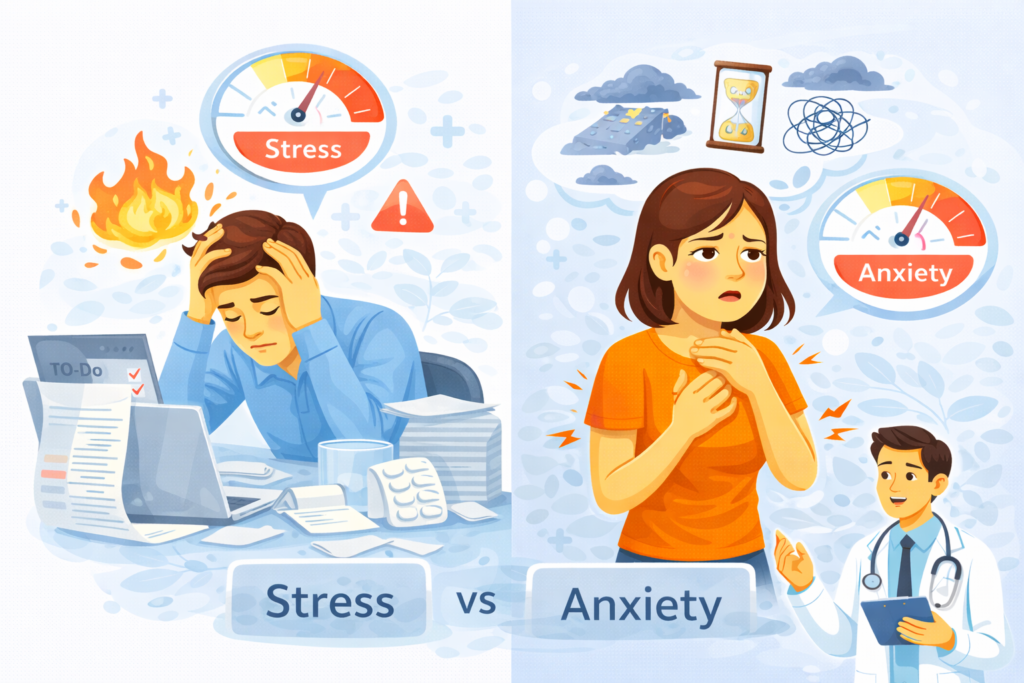
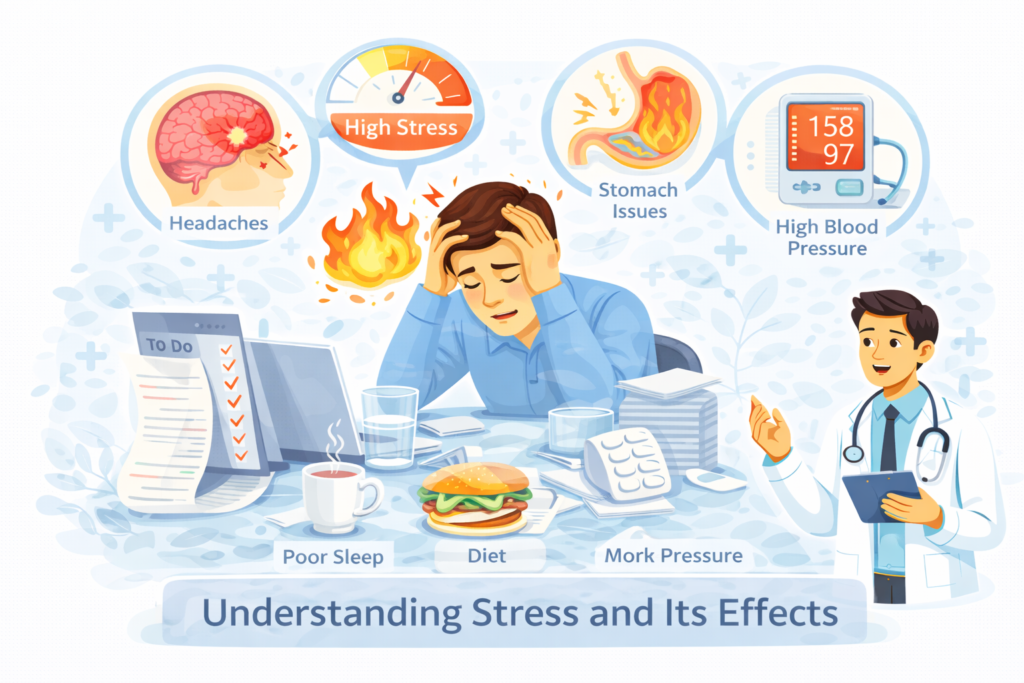
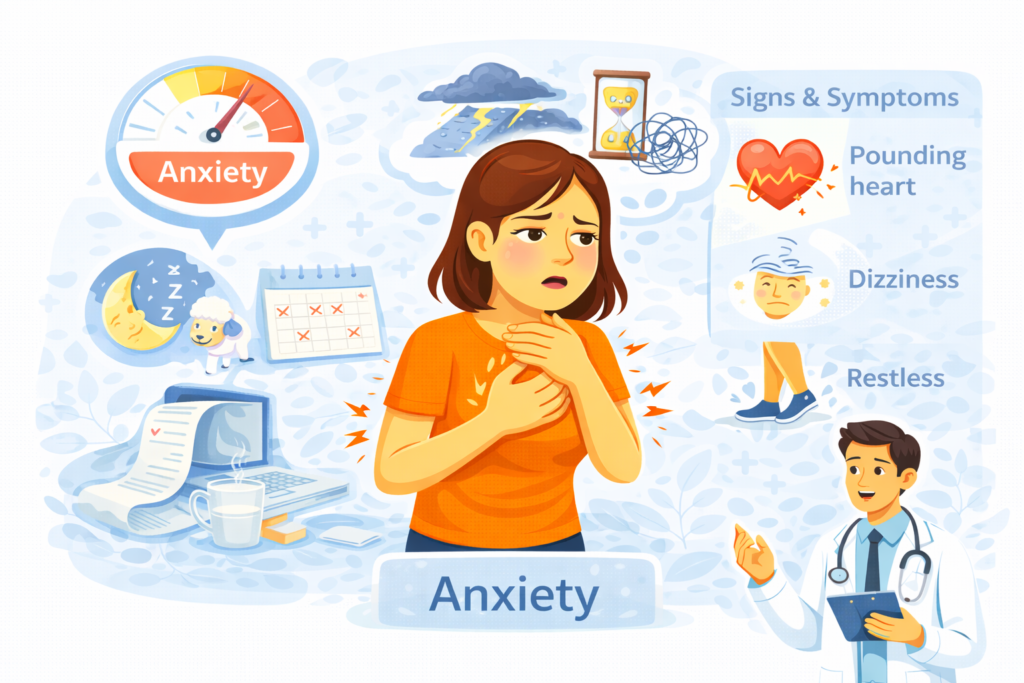
Mental well-being and physical health are deeply connected. What happens in the mind often shows up in the body, and physical health challenges can strongly influence emotions, energy, and outlook. Many people notice that during stressful periods they feel more tired, get sick more often, or experience physical discomfort without a clear cause.
What It Is
Mental well-being refers to emotional balance, psychological resilience, and the ability to cope with life’s challenges. Physical health involves how well the body functions, including energy levels, immune response, and physical comfort.
These two areas constantly influence each other. Emotional stress can affect sleep, appetite, immunity, and pain perception. Likewise, physical illness or discomfort can affect mood, motivation, and mental clarity. Rather than existing separately, mental and physical health function as a connected system.
Common Causes or Risk Factors
Challenges affecting both mental and physical health often share similar contributing factors. Common causes or risk factors may include:
- Chronic stress, which can strain multiple body systems
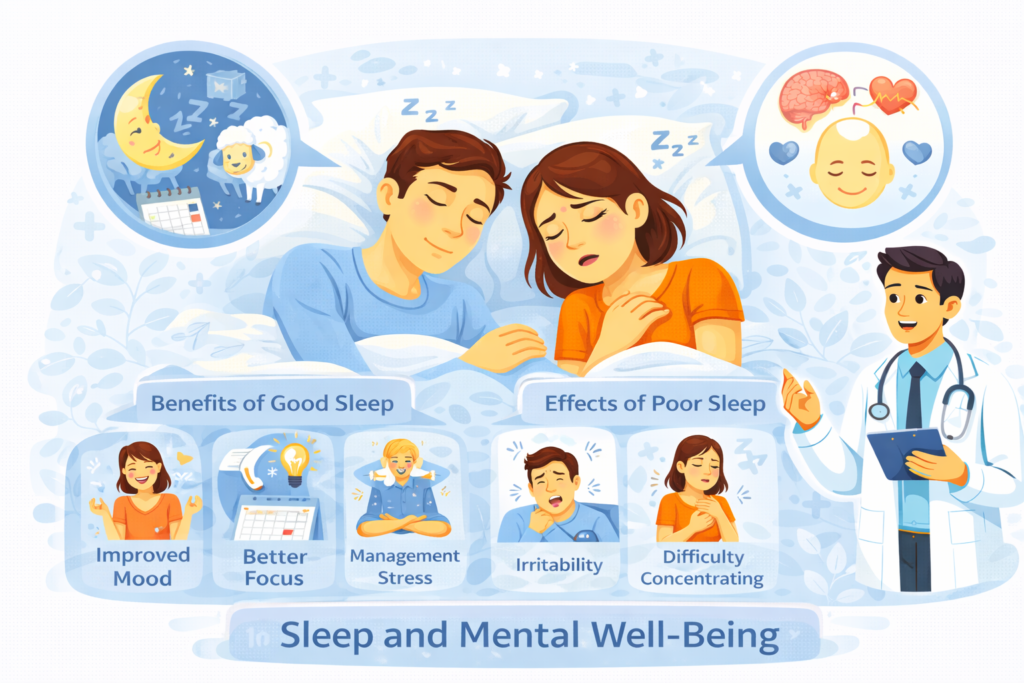
- Poor sleep, affecting both emotional regulation and physical recovery
- Low physical activity, which may impact mood and energy
- Ongoing health conditions, which can influence emotional well-being
- Chronic pain, affecting mood, sleep, and daily functioning)
- Unbalanced routines, with limited rest or recovery time
These factors often build gradually and may affect people differently depending on lifestyle and support systems.
Signs and Symptoms
When mental and physical health influence each other, signs may appear in both areas. Common symptoms may include:
Physical signs
- Fatigue or low energy
- Frequent headaches or muscle tension
- Digestive discomfort
- Changes in sleep patterns
Mental and emotional signs
- Low mood or irritability
- Increased anxiety or stress sensitivity
- Difficulty concentrating
- Reduced motivation
These symptoms may feed into each other, creating a cycle that affects overall well-being.
How It Is Identified or Evaluated
The connection between mental and physical health is usually explored through discussion with healthcare professionals. Evaluation often includes talking about lifestyle habits, emotional stressors, physical symptoms, and how these areas interact.
Professionals look at the whole picture rather than treating mental and physical concerns in isolation. This approach supports more balanced care.
General Management and Care
Supporting both mental and physical health involves integrated, lifestyle-based care. At a high level, this may include:
- Regular physical activity, supporting both mood and body function
- Balanced daily routines, including rest and activity
- Stress management, to reduce physical strain and emotional overload
- Adequate sleep, supporting recovery and emotional balance
- Medical and emotional support, when challenges persist
Care works best when mental and physical needs are addressed together.
Prevention or Risk Reduction
While challenges cannot always be prevented, certain habits may support both mental and physical health. These may include:
- Staying physically active
- Maintaining regular sleep schedules
- Eating a balanced diet
- Managing stress effectively
- Staying socially connected
- Attending routine health checkups
Prevention focuses on consistency, balance, and early attention to changes.
When to See a Healthcare Professional
It may be helpful to seek professional guidance if emotional distress begins to affect physical health, or if physical symptoms start to influence mood, sleep, or daily functioning. Evaluation is especially important when symptoms persist, worsen, or interfere with quality of life.
Early support can help prevent long-term strain on both mind and body.
Key Takeaways
- Mental well-being and physical health influence each other, affecting energy, mood, and overall functioning.
- Common risk factors include chronic stress, poor sleep, low physical activity, and unbalanced routines.
- Signs may manifest physically as fatigue or headaches, and mentally as irritability or anxiety.
- Integrated care, such as regular exercise and stress management, supports both mental and physical health.
- Seek professional help if emotional or physical symptoms interfere with daily life or persist over time.
Medical Disclaimer:
The information on this page is provided for educational and informational purposes only and is not intended as medical advice. It should not replace consultation with a qualified healthcare professional. For full details, please read our Disclaimer.